News lessonJune 2026
An Alert Can Interrupt You Before You Open It
The slowdown depended on how relevant the message seemed and how often people usually checked their phones. Switching off alerts is a social negotiation as well as a setting.

Before you read
1Warm up3 questions
Talk about these questions with a partner.
- Which notification is genuinely worth interrupting you for?
- Does a silent phone still tempt you to check it?
- Would you prefer one daily update or messages as they arrive?
2Key words8 words
These words are in the article. Choose the letter of the meaning for each one.
- notifications
- interruption
- slowdown
- dozens
- discipline
- respect
- individual
- expect
- Aa time when something becomes slower
- Bmessages or alerts that appear on your phone
- Cto think that something is important and not spoil it
- Dmany, about twelve or more
- Esomething that stops you while you are doing a job
- Fone single, not a group
- Gto think that something will happen
- Hthe ability to make yourself do the right thing
1Warm up3 questions
Talk about these questions with a partner.
- Which notification is genuinely worth interrupting you for?
- Does a silent phone still tempt you to check it?
- Would you prefer one daily update or messages as they arrive?
2Key words8 words
These words are in the article. Choose the letter of the meaning for each one.
- glance
- shift
- controlled
- demonstrate
- differ
- constant
- expectations
- uninterrupted
- Ahappening all the time
- Bto prove or show clearly
- Cto move or change from one thing to another
- Dbeliefs about how people should behave
- Eto look at something quickly
- Fcontinuing without being stopped
- Gto be not the same as someone else
- Hdone in a careful, planned way, often by scientists
1Warm up3 questions
Talk about these questions with a partner.
- Which notification is genuinely worth interrupting you for?
- Does a silent phone still tempt you to check it?
- Would you prefer one daily update or messages as they arrive?
2Key words8 words
These words are in the article. Choose the letter of the meaning for each one.
- cognitive
- perceived
- mechanisms
- appraisal
- negotiation
- entitled
- shake off
- short-lived
- Athe ways in which something works or happens
- Blasting only a short time
- Cto get rid of something that keeps bothering you
- Da careful judgement of how good or important something is
- Ehaving the right to something
- Fseen or understood in a particular way
- Ga discussion in which people try to reach an agreement
- Hconnected with thinking and understanding
Read
3Read the article
The paragraphs are numbered. Look out for the key words from task 2.
Core version
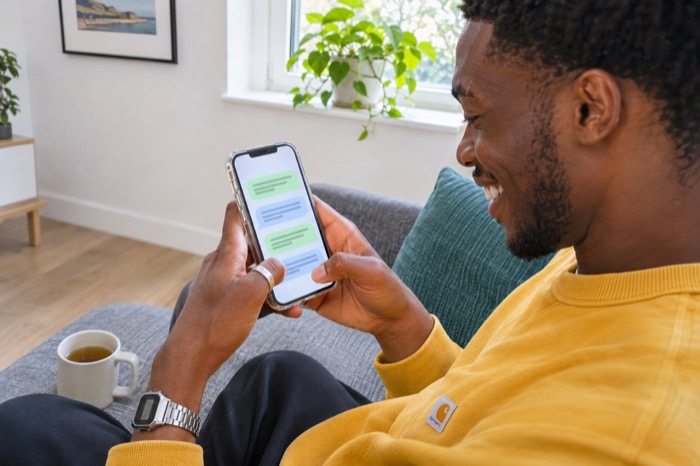
You are reading a book when your phone makes a sound. You look at the screen, read a message and go back to your book. The interruption took only a few seconds. But did it affect your concentration?
Researchers studying phone notifications asked a similar question. In research published in 2026 in Computers in Human Behavior, people completed an attention task while receiving notifications similar to those from social media. The researchers found that the messages caused a short slowdown in thinking, lasting about seven seconds.
Seven seconds may not sound like much. But many people receive dozens of alerts during the day. They come from friends, shops, work chats, news apps and social media. We can start expecting another message even when the phone is quiet.
The study did not show that phones permanently damage our brains or make everybody less intelligent. It examined what happened during a particular task. The effect depended partly on how important the notification seemed and how often participants usually checked their phones.
Some interruptions are useful. We may need to answer an urgent family message or hear about a change at work. Phones also help us learn, find directions and keep in touch with people who live far away.
It can help to think carefully about which apps are allowed to interrupt us. A message from a family member may be important. A reminder that an online shop has a sale probably is not. Many phones let us turn off alerts for individual apps, or choose a special setting when we want to work or sleep.
We can also explain to friends that we may not reply immediately. Of course, this can be difficult in jobs where managers expect very fast answers. That is why workplaces should discuss sensible rules about messages, especially outside working hours. Good concentration is not just about personal discipline. It can also depend on whether the people around us respect the time we need to finish a task.
Still, we can choose when we want to be available. Turning off unnecessary alerts or putting the phone in another room may make reading or studying easier. The goal is not to live without technology. It is to decide when we want technology to have our attention.
Intermediate version
You sit down to read an article, but before you reach the third paragraph, a notification appears. It might be a message from a friend or an offer from a shopping app. You glance at it and return to your reading. The interruption seems harmless, yet your concentration may already have been affected.
Try reading a long article while your phone lights up beside you. Even if you resist opening the message, part of your attention may shift towards wondering who contacted you.
A study published in Computers in Human Behavior in 2026 investigated the immediate effects of social-media-style notifications. Participants completed a task requiring attention while researchers measured their responses. Notifications produced a temporary slowdown in processing lasting approximately seven seconds. The disruption was related not just to the alerts themselves but also to how relevant they appeared and people's usual phone-checking habits.
This finding helps explain why constant availability can feel tiring. Our attention is repeatedly invited to move from one activity to another, even when we do not respond to every message. A phone sitting nearby may become a regular reminder that something else could demand our attention at any moment.
However, the research should not be exaggerated. The experiment measured a short-term effect in a controlled task. It does not demonstrate that smartphones permanently reduce intelligence or explain every concentration problem. People also differ in how they use devices, and many apps offer genuine practical benefits. Some people tackle the problem by switching off unnecessary alerts or putting the phone out of sight during important tasks. The aim is not to reject technology but to take back control.
The challenge is deciding which interruptions deserve our attention. An urgent call from a relative is not the same as a discount notification from a shop. Yet both may be allowed to interrupt important work if we leave every alert switched on.
An important part of the debate concerns social expectations. If friends, colleagues and managers assume that every message deserves an immediate reply, silencing notifications can feel rude rather than sensible. Yet constant responsiveness carries a cost that is not always visible in working hours or task lists. Teams can make concentration easier by agreeing which messages are urgent and when a slower response is acceptable.
Individuals can also separate essential alerts from promotional ones, schedule periods of uninterrupted work and leave devices out of reach while reading. None of this requires rejecting digital communication. Think of a group chat in which a colleague expects an answer within minutes: the alert is the same, but now it carries pressure to reply. Concentration depends on other people's expectations as well as our own habits.
Simple changes can create more control: limiting non-essential notifications, keeping phones out of sight during demanding activities or agreeing on times to respond to messages. Rather than asking whether phones are good or bad, perhaps we should ask who is choosing when our attention changes direction.
Advanced version
A banner flashes on your phone. You glance at it and return to the work in front of you. The interruption took seconds, but finding your place can take longer. Research on notifications asks what happens in that gap, and why some interruptions are harder to shake off than others.
A 2026 study published in Computers in Human Behavior examined how social-media-style notifications influence cognitive processing. While participants performed an attention task, incoming alerts produced a temporary slowdown lasting roughly seven seconds. The effect varied with the perceived relevance of the notification and with habitual patterns of phone interaction, rather than simply the total amount of time spent using a device.
The findings offer a more precise account of distraction than the familiar claim that smartphones are destroying our ability to concentrate. The experiment identified short-lived changes under particular conditions; it did not measure permanent cognitive decline. Nor would it be reasonable to generalise from one task to every kind of reading, work or conversation. There are good reasons to resist sweeping conclusions. Most experiments measure performance under specific conditions, whereas ordinary life involves different devices, habits, ages and reasons for checking a screen.
Nevertheless, the mechanisms are familiar. Notifications play on our sensitivity to potentially important information. A message might concern an urgent matter, an invitation or an irrelevant advertisement, but we often assess its significance only after turning our attention towards it. That repeated appraisal competes with the activity we originally intended to complete.
Digital connection brings considerable advantages. Quick communication supports families, workplaces and social networks, while accessibility tools and educational resources can make everyday tasks easier. The issue is therefore not an argument for doing away with smartphones, but for distinguishing essential communication from an endless stream of low-value interruptions. Rather than blaming every lapse of concentration on smartphones, the useful question may be which interruptions we can reasonably design out of the day, and which genuinely matter.
The study also raises a question about the organisation of digital life. Notifications are not merely technical signals; they communicate an expectation of attention. When employers demand immediate responses, or friends interpret delayed replies as a personal slight, managing interruptions becomes a social negotiation rather than a simple matter of self-control.
Individual settings such as scheduled focus periods can help, but they work best alongside shared expectations about urgency and availability. Organisations may need to consider the productivity cost of systems that continually interrupt employees, even when each notification appears trivial. The responsibility for concentration should not rest exclusively with the person receiving alerts when communication practices are designed to make attention permanently accessible.
A more deliberate approach to alerts could restore some control over concentration. If we choose when to check rather than responding to every signal, we may reduce needless interruptions without rejecting the technology itself. The key question is no longer whether our phones can attract attention. It is whether we have designed our daily lives so they are entitled to it.
After you read
4True, false or not given5 statements
Choose T (true), F (false) or NG (the article does not say).
- The study came out in 2026.
The text says: "In research published in 2026 in Computers in Human Behavior...".
- Most participants were university students.
Not stated. The text does not say who took part in the study.
- The slowdown lasted about seven seconds.
The text says the messages caused "a short slowdown in thinking, lasting about seven seconds".
- The study showed that phones permanently damage the brain.
The text says: "The study did not show that phones permanently damage our brains".
- The writer says every phone message is important.
The text says a reminder about an online sale "probably is not" important.
5Vocabulary5 gaps
Complete the sentences with words from the box. Two words are not needed.
availableconcentrationoccasionalpermanentlyremindersensibleurgent
- Call me if it is , but send a text if it can wait.
- Putting your phone in another room is a way to study.
- One day without a phone will not change your brain.
- Good is hard when your phone keeps buzzing.
- A small red number on an app is a constant that you have unread messages.
6Verb forms5 gaps
Write the correct form of the verb in brackets.
- You are a book when your phone makes a sound. (READ)
- In research in 2026, people completed an attention task. (PUBLISH)
- The researchers that the messages caused a short slowdown. (FIND)
- Yesterday my phone in the middle of a meeting. (RING)
- I three messages while I was cooking dinner. (GET)
7Language focusprepositions
Complete the sentences with words from the box. Two words are not needed. Some verbs and adjectives always take the same small word after them. Learn them together, for example worried about.
aboutatfromofontowith
- The slowdown depended partly how important the message seemed.
- Please reply my message before lunch.
- A long message arrived my sister this morning.
- He is worried how often his brother checks the phone.
- Many people keep their phone silent night.
4True, false or not given5 statements
Choose T (true), F (false) or NG (the article does not say).
- Teams can agree which messages are urgent.
The text says teams can agree "which messages are urgent and when a slower response is acceptable".
- The experiment demonstrated a permanent loss of intelligence.
The text says it "does not demonstrate that smartphones permanently reduce intelligence".
- Most companies now ban messages after six o'clock.
Not stated. The text does not say what companies do about messages after work.
- The writer suggests that a phone can distract you even if you never touch it.
The text says that even if you resist opening the message, "part of your attention may shift".
- People who check their phones more often always showed a longer slowdown.
Not stated. The text says habits mattered, but not in which direction.
5Vocabulary6 gaps
Complete the sentences with words from the box. Two words are not needed.
demandessentialexaggeratedgenuineinsistpermanentresisttemporary
- The delay was only , and attention returned to normal within seconds.
- I thought the email was from my bank, but it was not .
- The headline the findings: the study never claimed that phones harm everyone.
- It is to keep your phone charged before a long journey.
- It is hard to looking at a screen that keeps lighting up.
- Some jobs a reply within minutes.
6Verb forms5 gaps
Write the correct form of the verb in brackets.
- When I finally checked my phone, three friends me. (MESSAGE)
- The study in Computers in Human Behavior in 2026. (PUBLISH)
- If you had turned off the alerts, you your place. (NOT LOSE)
- Participants to ignore the alerts, but many still looked. (TELL)
- Alerts much more common over the last ten years. (BECOME)
7Language focusprepositions
Complete the sentences with words from the box. Two words are not needed. Many verbs, adjectives and nouns have a fixed preposition after them. Learn the whole chunk, such as responsible for, not just the single word.
atforfromofontowith
- Some people are addicted checking their phones.
- How well you concentrate depends how tired you are.
- Sleep problems may result late-night scrolling.
- She was accused ignoring her friends because she replied late.
- Parents often argue their teenagers about screen time.
4True, false or not given5 statements
Choose T (true), F (false) or NG (the article does not say).
- The study suggests that total time spent on a phone is the main factor behind the slowdown.
The effect varied with relevance and habit, "rather than simply the total amount of time spent using a device".
- A notification can compete with a task even when its content turns out to be irrelevant.
We assess a message's significance only after turning our attention to it, and "that repeated appraisal competes" with the task.
- The writer believes that individual settings are enough on their own.
Settings "work best alongside shared expectations about urgency and availability".
- The slowdown was longer for participants over forty.
Not stated. The text mentions no age differences among participants.
- The writer accepts that phones have benefits but still wants changes in how alerts are managed.
The text praises "considerable advantages" yet calls for distinguishing essential communication and a "more deliberate approach to alerts".
5Vocabulary6 gaps
Complete the sentences with words from the box. Two words are not needed.
deliberateexaggerateexclusivelygeneralisehabitualmomentaryrestoreslight
- As a late-night scroller, he no longer noticed how long he stayed online.
- The company made a decision to switch off email after six, rather than letting it happen by accident.
- The report blames teenagers , although adults check their phones just as often.
- He took his colleague's late reply as a personal , though she was only busy.
- A weekend without email may the energy you lost during a busy week.
- It would be unwise to from a single experiment to the whole population.
6Word forms5 gaps
Use the word in brackets to make a word that fits the gap.
- The of the findings is limited because only one task was tested. (APPLY)
- Employers who demand instant replies show little for their staff's private time. (CONSIDER)
- Constant interruption is a serious to deep thought. (HINDER)
- The study's depends on how the participants were chosen. (RELY)
- She was to put her phone down, even during dinner. (WILLING)
7Language focusprepositions
Complete the sentences with words from the box. Two words are not needed. Look at the word before the gap. Fixed combinations such as prone to cannot be guessed from meaning alone, so learn them as chunks.
againstamidbetweenforontowith
- The research draws a distinction short-term slowdown and lasting harm.
- Heavy users may be more susceptible distraction than occasional ones.
- Whether a policy works often hinges how staff are treated.
- Managers were criticised expecting replies at midnight.
- The firm's approach is at odds its claim to value work-life balance.
Speak
8Talk about it3 questions
Discuss in pairs or small groups. Give reasons for your answers.
- Who should decide what counts as an urgent notification?
- What would you switch off if you could try it for only one day?
- Should apps have to earn the right to interrupt you?
8Talk about it3 questions
Discuss in pairs or small groups. Give reasons for your answers.
- Who should decide what counts as an urgent notification?
- What would you switch off if you could try it for only one day?
- Should apps have to earn the right to interrupt you?
8Talk about it3 questions
Discuss in pairs or small groups. Give reasons for your answers.
- Who should decide what counts as an urgent notification?
- What would you switch off if you could try it for only one day?
- Should apps have to earn the right to interrupt you?
9Role-play: the ten-minute reply rule
Work in pairs. Read your card, then have the conversation. Swap roles and do it again.
Student A · the manager
You want your team to answer work messages within ten minutes, even in the evening. Explain why. Ask at least two questions, then decide: agree a rule, change it, or keep it.
Student B · the employee
You want to switch off work alerts after six o'clock because you can't concentrate or rest. Explain how it affects you and suggest a rule that works for both of you.
Useful phrases
- I'd like to switch off alerts after six.
- Which messages are really urgent?
- I can't concentrate when my phone keeps buzzing.
- We're a small team, so I need quick answers.
- Could we agree a time to reply?
- That's a fair compromise.
Afterwards, tell the class: what rule did you agree, and is it fair for both people?
Your words
Highlights0 saved
Highlights0 saved
Highlights0 saved
Was this lesson useful? Support johnplusnews on Ko-fi
Continue reading
Technology
Can You Be Emotionally Close to Someone Who Is Not Human?
A survey of 463 adults in the United States found that people in relationships with AI chatbots can feel as emotionally close as other couples, but the link between closeness and loneliness looked different.
Work
They Still Have Their Jobs. They Are Leaving Anyway
Nobody made these workers redundant. AI changed what their work felt like, and they walked out on careers they had spent a decade building.
Psychology
The Way You Think About Being Alone Changes How It Feels
Researchers read 144 newspaper articles about solitude and found them overwhelmingly gloomy. They also found that what you believe about time alone predicts how lonely it makes you.