News lesson10 July 2025
The Trip You Need a Holiday to Recover From
Slow travel means fewer places and more unplanned hours. It is not automatically cheaper or greener, and it is hard to manage on limited annual leave.
Before you read
1Warm up3 questions
Talk about these questions with a partner.
- Would you enjoy a holiday with nothing booked?
- What makes doing very little feel different on holiday?
- Would you rather discover one place slowly or see several quickly?
2Key words8 words
These words are in the article. Choose the letter of the meaning for each one.
- boring
- famous
- tickets
- cultural
- particular
- reduce
- dream
- detail
- Apieces of paper that let you go into a place
- Bto make something smaller or less
- Csomething you very much want to have or do
- Done special thing, not any other
- Eone small piece of information about something
- Fnot interesting, so you feel tired of it
- Gabout the art, music, food and history of a place
- Hknown by many people
1Warm up3 questions
Talk about these questions with a partner.
- Would you enjoy a holiday with nothing booked?
- What makes doing very little feel different on holiday?
- Would you rather discover one place slowly or see several quickly?
2Key words8 words
These words are in the article. Choose the letter of the meaning for each one.
- demanding
- recover
- imaginary
- romanticise
- sustainable
- affordable
- relationship
- impact
- Athe way two things or people are connected
- Bneeding a lot of effort or attention
- Cnot real, only in the mind
- Dthe effect that something has
- Enot too expensive for most people
- Fto make something seem better or more exciting than it is
- Gto get your energy back after being tired
- Hgood for the environment over a long time
1Warm up3 questions
Talk about these questions with a partner.
- Would you enjoy a holiday with nothing booked?
- What makes doing very little feel different on holiday?
- Would you rather discover one place slowly or see several quickly?
2Key words8 words
These words are in the article. Choose the letter of the meaning for each one.
- itinerary
- fortnight
- aimless
- attentively
- expenditure
- genuine
- assumption
- motivation
- Athe reason why someone wants to do something
- Bsomething you accept as true without proof
- Ca plan of the places you will visit on a trip
- Dthe amount of money that is spent
- Ewithout any clear purpose or direction
- Fa period of two weeks
- Greal, not pretended
- Hin a way that shows you are listening or looking carefully
Read
3Read the article
The paragraphs are numbered. Look out for the key words from task 2.
Core version
Imagine going on holiday and waking up without any plans. You have no museum tickets, no early train and no list of places you must visit. You could sit in a café for two hours or take a walk and see where you end up. Would that sound relaxing or boring?
Many holidays are full of activities. People want to visit famous places, eat at popular restaurants and take beautiful photographs. When they have only a week away, they may feel that every minute needs to count. But a busy holiday can leave people feeling tired.
A 2025 survey by the Marist Poll found that 45% of Americans planning a summer holiday said their main aim was rest and relaxation. Other people wanted adventure, cultural experiences or time with family and friends. The results remind us that travellers do not all want the same thing.
A slower holiday might mean staying in one place rather than changing hotels every night. You could explore local streets, go swimming, read a book or simply enjoy a long lunch. There may be fewer exciting photographs, but also less pressure to be somewhere at a particular time.
Of course, doing nothing is not everybody's dream. Some people have saved money for years to see famous sights. Others love climbing mountains or visiting museums.
Travelling slowly can also change how we spend money. Instead of paying for many tickets and long journeys, someone might choose a simple apartment and cook a few meals. Staying in one place may reduce transport costs, but longer holidays still need time away from work. Others enjoy organised trips because they do not have to think about every detail themselves.
A family with young children may want an easy beach holiday, while a person who loves history may happily spend each day in museums. What matters is giving yourself enough time to enjoy your choices. Even a short weekend can feel restful if you do not try to fit a week's activities into two days.
Perhaps the best holiday is not the busiest or the quietest one. It is the one that gives you what you actually need. Before planning every hour, it may be worth asking: am I going away to see everything, or to enjoy being somewhere different?
Intermediate version
A week in a new country can sometimes feel like an unusually demanding job. There are famous landmarks to visit, restaurants to book and photographs to take before moving on to the next destination. Travellers return home with hundreds of pictures and a strange feeling that they need another holiday to recover.
A packed itinerary can be enjoyable, especially on a first visit. But there is little room for surprises when every meal, museum and train journey has been booked months in advance.
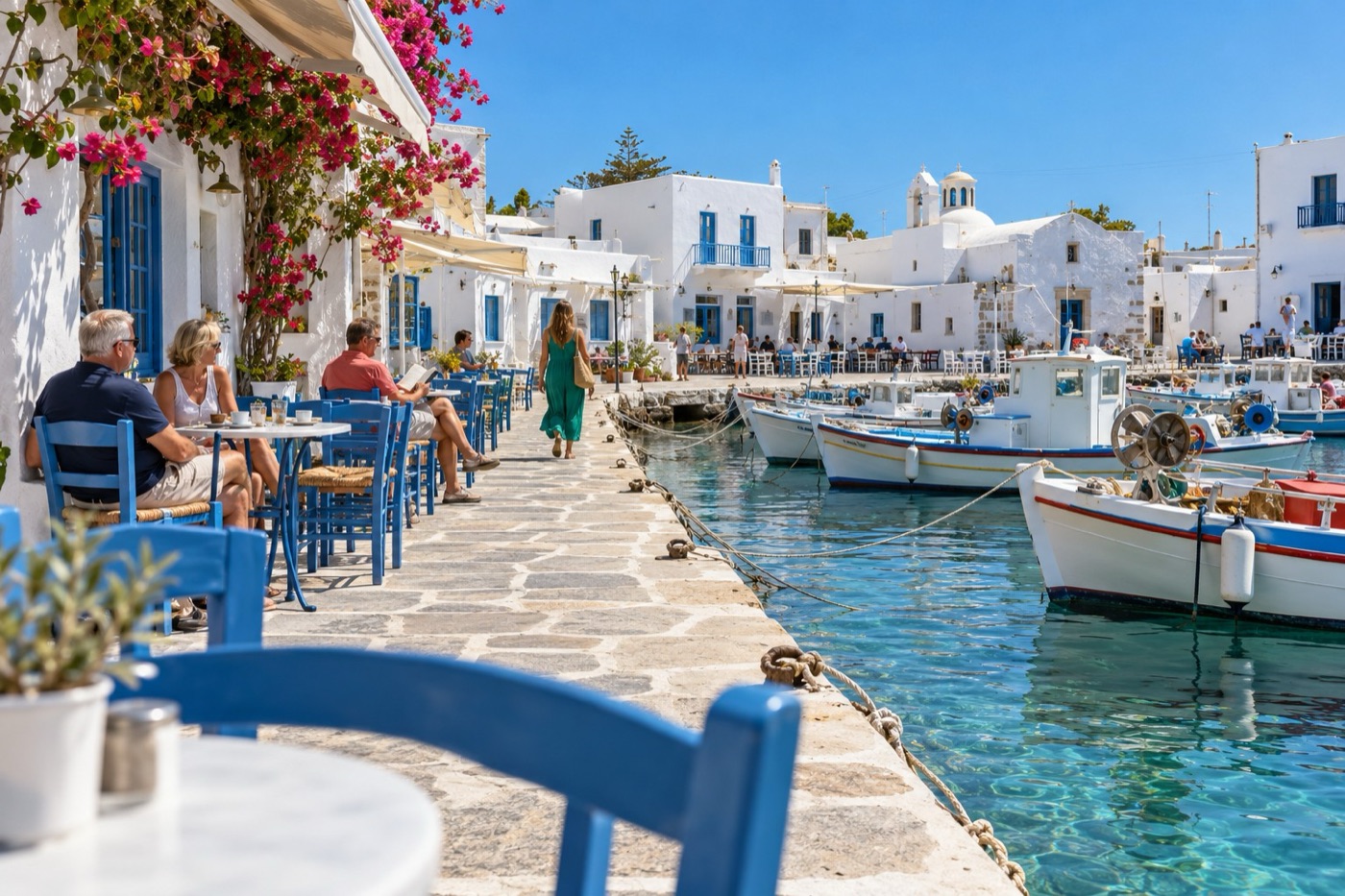
Against this approach is the appeal of slow travel: spending more time in fewer places, allowing ordinary moments to become part of the experience. Instead of rushing between attractions, someone might spend a morning in a neighbourhood café, wander without a plan or return to the same beach several days in a row.
The desire for rest is not imaginary. In a July 2025 Marist Poll, 45% of Americans who planned a summer holiday said rest and relaxation were their main goal. The survey also found travellers who preferred seeing family, exploring new places or experiencing culture. It does not prove that slow travel is becoming more popular everywhere, but it illustrates that relaxation is a major reason for travelling.
Slow holidays may also offer a different relationship with a destination. Staying longer can create opportunities to discover local routines rather than concentrating only on the most famous attractions. At the same time, visitors should be careful not to romanticise ordinary communities as entertainment created for tourists. Slow travel also means accepting that you will miss things. Instead of treating that as a failure, travellers can enjoy getting to know a smaller area properly.
There are practical disadvantages. Some travellers cannot afford extended time away, while others reasonably want to see as much as possible when visiting a distant country. And for people who enjoy adventure, an empty itinerary might feel like a missed opportunity rather than freedom.
Slower travel can also influence spending and the local economy. Staying in one area may mean fewer expensive transfers and more opportunities to use neighbourhood shops and restaurants. But its environmental impact depends on much more than how long a visitor remains. The journey to the destination, the type of accommodation and the activities chosen all matter. Nor is a longer stay automatically affordable or sustainable.
A couple with limited annual leave may get more out of a carefully planned weekend than an unstructured two-week holiday they cannot realistically take. The idea of travelling slowly is best understood as a possible approach rather than a new set of rules. It encourages people to leave room for unexpected pleasures.
Perhaps the important choice is not between doing everything and doing nothing. It is recognising that a successful holiday does not need to be measured by the number of places visited. Sometimes one memorable afternoon can matter more than a long checklist of sights.
Advanced version
The modern holiday is often organised around a fear of missing out. A break can turn into a rush between bookings, directions and photographs. Someone can come home with plenty to show and little sense of having rested.
An alternative is to travel more slowly: choosing fewer destinations, leaving unstructured time and allowing a place to become familiar rather than treating it as a collection of attractions. The appeal is easy to understand. A long lunch, an aimless walk or a morning spent reading beside the sea may provide a sense of freedom that a tightly managed itinerary cannot.
A July 2025 Marist Poll offers useful context. Among Americans planning a summer holiday, 45% identified rest and relaxation as their principal aim, while others prioritised visiting loved ones, adventure or cultural experiences. The survey did not directly measure slow travel, nor should its US results be presented as a global trend. It does, however, show that recovery is a major motivation for taking time away.
There is a subtle difference between travelling slowly and simply staying still. A visitor can explore a place attentively without rushing, while another may shut themselves away indoors for a fortnight and see very little. Slow travel can sometimes encourage more sustained engagement with local life, particularly when visitors move beyond the most photographed landmarks. Yet there is a danger in assuming that lingering somewhere automatically makes tourism more responsible. Transport choices, accommodation, visitor numbers and the needs of residents also matter.
The freedom to travel slowly is unequally distributed. People with limited annual leave or costly long-distance journeys may understandably prefer ambitious itineraries. For someone visiting a country once in a lifetime, seeing several remarkable places is not necessarily a sign of superficial travel. Perhaps the most liberating decision is to leave some hours unclaimed. A recommendation from a local resident or an unexpected change in weather can then become part of the experience.
The economics of leisure also influence how holidays are planned. International travel can require substantial expenditure and limited annual leave, making an ambitious itinerary a rational choice for somebody who may never return to the destination. Remaining in one area might reduce internal transport and encourage spending at local businesses, but a longer trip is not automatically cheaper or environmentally responsible.
Those outcomes depend on travel distances, accommodation and the wider tourism model. Slow travel is therefore most useful as a challenge to the assumption that value is proportional to the number of attractions completed. It invites travellers to consider what they genuinely want from a journey, whether that means time with family, a particular cultural experience or simple recovery from everyday pressures.
Perhaps the real problem is the expectation that holidays must be optimised. Restful and adventurous travel can both be rewarding when they reflect genuine preferences rather than pressure to tick off experiences. The most successful trip may be the one that leaves a person feeling they actually spent time somewhere, rather than merely passed through it.
After you read
4True, false or not given5 statements
Choose T (true), F (false) or NG (the article does not say).
- Slow holidays are becoming more popular in Europe.
Not stated. The text does not say whether slow holidays are becoming popular in Europe.
- A 2025 Marist Poll found 45% named rest and relaxation as their aim.
The text says: "A 2025 survey by the Marist Poll found that 45% of Americans planning a summer holiday said their main aim was rest and relaxation."
- A slower holiday might mean staying in one place.
The text says: "A slower holiday might mean staying in one place rather than changing hotels every night."
- The article says everyone should take a slow holiday.
The text says the opposite: "Of course, doing nothing is not everybody's dream."
- The writer thinks a short weekend cannot feel restful.
The text says: "Even a short weekend can feel restful if you do not try to fit a week's activities into two days."
5Vocabulary5 gaps
Complete the sentences with words from the box. Two words are not needed.
adventureapartmentbudgetpressuresouvenirsurveytransport
- A short of 1,000 travellers asked what they wanted from a summer break.
- Some people feel to see everything because they have only a week.
- Climbing mountains and trying new sports is the kind of some people love.
- We rented a small with a kitchen instead of staying in a hotel.
- A holiday in one town means you spend less on because you take fewer trains.
6Verb forms5 gaps
Write the correct form of the verb in brackets.
- A 2025 survey that 45% wanted rest and relaxation. (FIND)
- Some people have money for years to see famous sights. (SAVE)
- Last summer we in the same café every morning. (SIT)
- Last year we tickets for six museums, but we were too tired to visit them. (BUY)
- Before every hour, it may be worth asking what you need. (PLAN)
7Language focusphrasal verbs
Complete the sentences with words from the box. Two words are not needed. A phrasal verb is a verb plus a small word. The small word changes the meaning, so learn the two words together.
awaydowninoffoutoverup
- We woke late and had breakfast in the garden.
- The plane took at six in the morning, so we were tired all day.
- They checked of the hotel at ten and caught a train.
- It is hard to fit too many sights a short weekend.
- I'd love to get from the city for a few days.
4True, false or not given5 statements
Choose T (true), F (false) or NG (the article does not say).
- The Marist Poll can show only what some Americans think, not what travellers everywhere think.
The text says the survey "does not prove that slow travel is becoming more popular everywhere".
- The writer says staying longer is always better for the environment.
The text says: "Nor is a longer stay automatically affordable or sustainable."
- Younger travellers prefer slower holidays.
Not stated. The text does not say which age groups prefer slower holidays.
- Slow travel means that some sights will not be seen.
The text says: "Slow travel also means accepting that you will miss things."
- The writer thinks a couple with limited annual leave should take a two-week holiday.
The text says such a couple may get more out of a carefully planned weekend than a two-week holiday they cannot realistically take.
5Vocabulary6 gaps
Complete the sentences with words from the box. Two words are not needed.
accommodationappealdestinationdisadvantagesexcursionsexpenditurelandmarkstransfers
- Travellers queue to photograph famous such as towers and old bridges.
- We are looking for cheap near the beach, preferably with a kitchen.
- The of an unplanned week by the sea is easy to understand: nobody has to hurry.
- The hotel arranged two between the airport and the station, and each one cost extra.
- Before choosing a , check how long the journey takes and what the weather is like.
- One of the of long stays is that they need more days away from work.
6Verb forms5 gaps
Write the correct form of the verb in brackets.
- By the time we reached the beach, the café for the day. (CLOSE)
- By the time we set off, every train and museum visit for months. (BOOK)
- If I had more annual leave, I a whole month in Portugal. (SPEND)
- Since last year, my sister in the same village for every holiday. (STAY)
- Slow travel encourages people room for unexpected pleasures. (LEAVE)
7Language focusphrasal verbs
Complete the sentences with words from the box. Two words are not needed. Many phrasal verbs have more than one meaning. Read the whole sentence and ask which meaning fits.
backdowninonoutoverup
- It took me two days to get the stress of a packed schedule.
- The train stopped for an hour, but we carried reading and did not mind.
- The plan was to see six cities, but it did not work because of the weather.
- Let's catch with old friends rather than visit another museum.
- Locals suggested we drop at the market for lunch.
4True, false or not given5 statements
Choose T (true), F (false) or NG (the article does not say).
- The poll's result supports the idea that many holidaymakers want to recover, but it cannot show that slow travel is growing.
The text says recovery is "a major motivation" but "The survey did not directly measure slow travel".
- The writer believes that seeing many places in a short time is always a sign of superficial travel.
The text says seeing several remarkable places "is not necessarily a sign of superficial travel".
- Most of the Americans in the survey took their summer holidays abroad.
Not stated. The text does not say where the respondents planned to travel.
- The writer accepts that a traveller who will visit a country only once may sensibly choose a busy schedule.
The text says an ambitious itinerary can be "a rational choice for somebody who may never return to the destination".
- The writer treats travelling slowly and staying still as the same thing.
The text says: "There is a subtle difference between travelling slowly and simply staying still."
5Vocabulary6 gaps
Complete the sentences with words from the box. Two words are not needed.
negligibleoptimisedostentatiousprincipalrationalsuperficialsustainedunclaimed
- Critics call the tour because visitors spend ten minutes at each site and never speak to a local.
- Given that she will probably never return, spending her whole fortnight in the capital is a perfectly choice.
- Local life only becomes visible through engagement over weeks, not a single afternoon.
- Rest was by far the reason for the trip; every other motive came a long way behind.
- Her diary was full, apart from one Sunday afternoon that she kept deliberately .
- Every minute of the two-day city break had been so tightly that there was no room for a wrong turning.
6Word forms5 gaps
Use the word in brackets to make a word that fits the gap.
- The of tourists in the old town has left residents struggling to rent flats. (CONCENTRATE)
- A rushed itinerary leaves only memories of the places you saw. (FRAGMENT)
- Many people consider an empty day wasteful, even , in a culture that prizes busyness. (PRODUCE)
- Local residents resented the of visitors who treated their village like a film set. (THOUGHT)
- It would be to claim that one weekend can cure years of exhaustion. (REAL)
7Language focusphrasal verbs
Complete the sentences with words from the box. Two words are not needed. A small word can change the meaning completely: turn out and turn up are different. Read the whole sentence before you choose.
awaydowninoffoutthroughup
- How the day would pan was anyone's guess.
- Rather than book ahead, she preferred to turn and see what was available.
- It is tempting to cram too much , but a trip loses its charm when every hour is booked.
- The rain meant we had to call the whole outing .
- She finally managed to get from email by leaving her phone at home.
Speak
8Talk about it3 questions
Discuss in pairs or small groups. Give reasons for your answers.
- Can an uneventful holiday still give you a good story?
- What would you leave out of a trip to enjoy it more?
- Would you need to travel at all to take the break you wanted?
8Talk about it3 questions
Discuss in pairs or small groups. Give reasons for your answers.
- Can an uneventful holiday still give you a good story?
- What would you leave out of a trip to enjoy it more?
- Would you need to travel at all to take the break you wanted?
8Talk about it3 questions
Discuss in pairs or small groups. Give reasons for your answers.
- Can an uneventful holiday still give you a good story?
- What would you leave out of a trip to enjoy it more?
- Would you need to travel at all to take the break you wanted?
9Role-play: planning a week away
Work in pairs. Read your card, then have the conversation. Swap roles and do it again.
Student A · the planner
You want to see as much as possible on a week away. You've found six places and a list of tickets to book. Explain why it matters to you, and try to agree on a plan.
Student B · the slow traveller
You want a quiet holiday in one place, with nothing booked. Explain what you'd enjoy and why a busy week would spoil it for you.
Useful phrases
- I'd love to see as much as possible.
- I'm worried we'll be too tired to enjoy it.
- What if we spend a few days in one place?
- That's a fair point, but we've only got a week.
- Could we plan two busy days and leave the rest free?
- I'm happy to compromise if we both get something we want.
Afterwards, tell the class: what plan did you agree, and who gave way more?
Your words
Highlights0 saved
Highlights0 saved
Highlights0 saved
Was this lesson useful? Support johnplusnews on Ko-fi
Continue reading
Work
Could a Better Job Be About Time, Not Money?
A global survey of 40,500 workers found that work-life balance has overtaken salary as the main reason people would consider leaving a job. What does that tell us about how people want to live?
Lifestyle
Can You Learn a Better Life from an Italian Grandmother?
Two friends in their late eighties bake bread in a small Italian town. The internet has decided they are the answer to something.
Travel
What Happens When One of the World's Quietest Places Gets Easier to Visit?
Greenland now has three new airports and more visitors than ever, but tourism is still a small part of its economy. Some residents worry about what a rush of visitors could do to a quiet place with a fragile environment.