Why Did "Human" Become a Word of the Year?
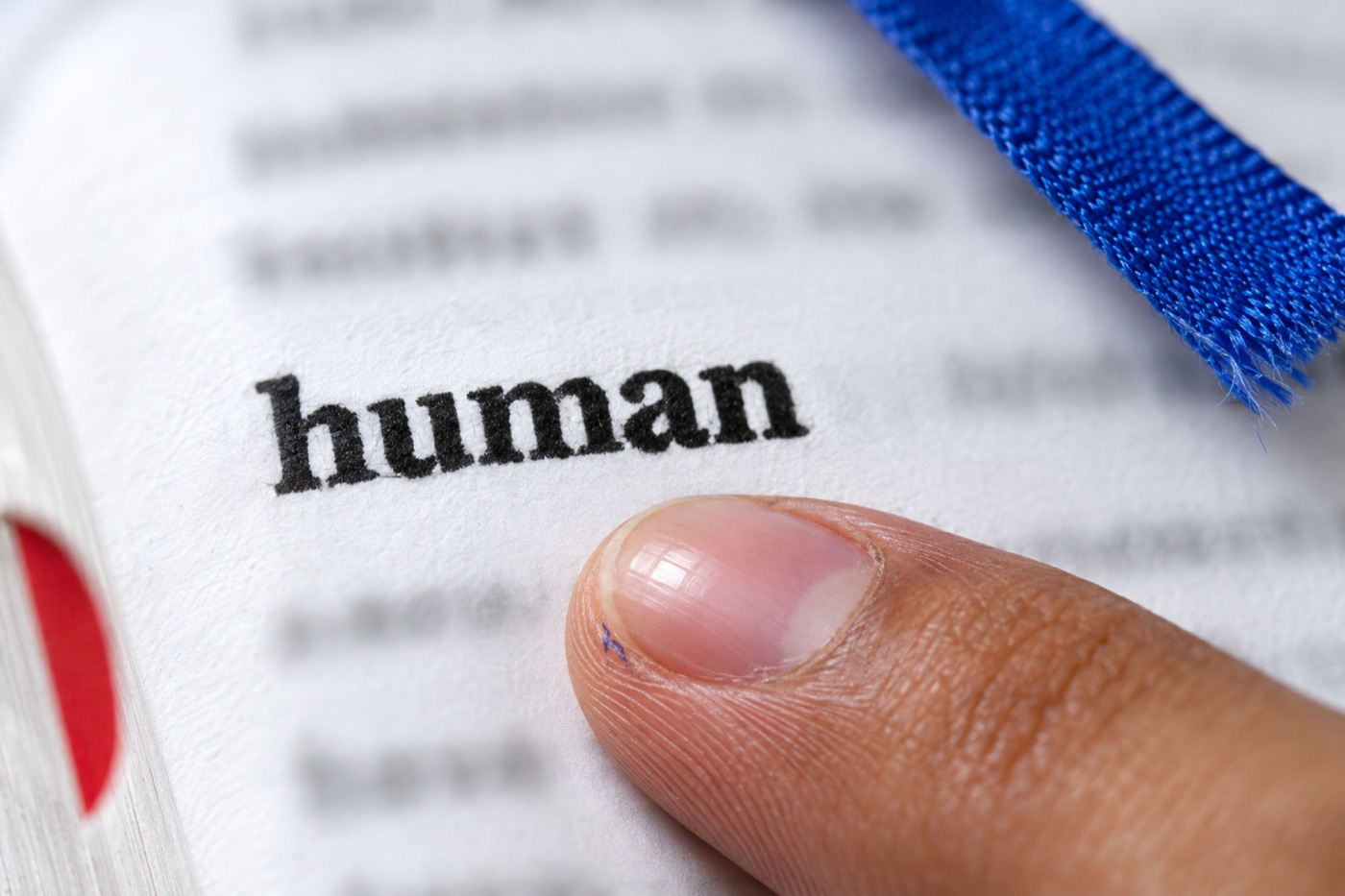
Cambridge Dictionary picked one of the simplest words in English as its 2026 Word of the Year. Its reason is AI, and how hard it is getting to tell what people made and what machines made.
Warm up3 questions
- How do you think a dictionary chooses its Word of the Year?
- Where do you see AI being used in everyday life?
- What qualities do you think of when you hear the word human?
Sentence help (optional): I'd choose ... because ... · For me, ... · I think ... because ...
Warm up3 questions
- How do you think a dictionary chooses its Word of the Year?
- Where do you see AI being used in everyday life?
- What qualities do you think of when you hear the word human?
Warm up3 questions
- How do you think a dictionary chooses its Word of the Year?
- Where do you see AI being used in everyday life?
- What qualities do you think of when you hear the word human?
Core version
Dictionaries choose words that reflect our world. Sometimes they pick exciting new slang that many adults have never heard before. In 2026, the Cambridge Dictionary made a surprising choice. Its Word of the Year was not a strange internet expression or a new scientific term. It was a word almost every English learner already knows: human.
Cambridge announced the choice on 18 November 2026. The dictionary said the word had become especially important because of the rapid growth of artificial intelligence. Computers can now write stories, answer questions, create pictures and hold conversations. As these tools become more powerful, people are asking what makes humans different from machines. A familiar word has taken on new importance.
Human can mean a person, but it can also describe the feelings and qualities we connect with people. Someone might say that a mistake was a human error or that a song feels deeply human. We use the word when talking about creativity, emotions and relationships. We also use it to make a difference between something made by a person and something produced by a computer.
Think about schoolwork. If a computer writes an essay and a student changes two sentences, is that human writing? What if an AI tool creates a picture and a person chooses the best version? These questions are becoming more common in classrooms and creative industries. Technology can help people work faster, but it also makes it harder to decide who made something and what kind of effort went into it.
Of course, machines do many useful things. They can translate text, explain difficult subjects and help people who need extra support. Choosing human as a word of the year does not mean that all AI is bad. The interesting question is which parts of life we want to keep personal. A message written by a friend may matter more because someone took the time to write it.
Maybe the word human was chosen because it reminds us of things that are easy to forget: kindness, imagination, humour and the ability to connect with others. Computers may become better at copying how people speak, but many people still value knowing that another person is behind the words. If you could choose the next Word of the Year, would you pick a new slang term or a simple word that has changed its meaning?
Intermediate version
Dictionaries usually attract attention with surprising new words, fashionable slang or expressions that suddenly appear everywhere online. So when Cambridge Dictionary announced its Word of the Year for 2026, the choice seemed almost too ordinary. The winning word was human, one that even beginner learners of English are likely to recognise. Yet the decision reflects a very modern debate about artificial intelligence and what makes people different from machines.
Cambridge announced the selection on 18 November 2026, saying that the year had been shaped by debates about what it means to be human, and that the rapid development of AI had renewed appreciation for human creativity, connection and authenticity. Computer systems can now produce convincing text, images and voices, often in seconds. As the technology becomes more widely available, people have started asking whether something was created by a person or generated automatically. The word human helps them describe the difference, even when that difference is increasingly difficult to see.
The word also carries more meaning than simply belonging to our species. We talk about human emotions, human mistakes and a human touch. A message can feel more meaningful because we know a friend wrote it, while a drawing may be special precisely because someone spent hours making it. However, the ability to produce something quickly and beautifully is not necessarily the same as having a personal experience behind it. That distinction is at the heart of many arguments about AI.
Young people face these questions regularly. Students can use AI to check grammar, plan presentations or explain difficult topics. It may be a helpful learning tool, but what happens when it writes the entire assignment? A teacher may struggle to tell whether a piece of work shows a student's understanding. The same tool can help in one situation and create serious problems in another. Similar questions are appearing in music, film and art, where technology can copy certain styles without going through the experiences that shaped the original creators.
The story is not simply about humans competing with machines. AI can support people with disabilities, help learners understand new ideas and remove repetitive tasks. The real issue may be deciding when its speed is useful and when personal effort or genuine connection matters more. There is no single answer. Different situations call for different kinds of help, and using technology does not automatically make someone's work less valuable.
Perhaps Cambridge chose such an ordinary word because it had become surprisingly difficult to define its importance. As machines get better at imitating conversation and creativity, people may place greater value on knowing who is behind the work. A handwritten card, an imperfect photograph or an honest conversation might feel more special for that reason. In an age when computers can produce so much, what do you think will remain unmistakably human?
Advanced version
Word of the Year announcements usually celebrate a newly fashionable expression or a term that has suddenly entered everyday conversation. Cambridge Dictionary took a rather different approach in November 2026. Instead of choosing a fresh piece of internet slang, it selected human, one of the most familiar words in the English language. The choice reflects an increasingly urgent and culturally significant question: as artificial intelligence becomes capable of producing convincing writing, images and conversations, what exactly do we mean when we describe something as human?
Announced on 18 November 2026, the decision was presented by Cambridge University Press and Assessment as a response to debates about creativity, authenticity and personal connection. AI systems can now generate material that once required considerable human effort, while digital tools increasingly blur the boundary between work made by a person and output produced by a machine. In that context, human is not merely a biological label. It has become an increasingly important way of identifying qualities and experiences that people believe should still carry particular value.
The word appears in phrases that reveal how flexible its meaning can be. A human touch suggests warmth and personal attention, while human error reminds us that mistakes are part of ordinary life. When someone describes a performance or piece of writing as deeply human, they may be referring to emotional honesty rather than technical perfection. Such distinctions have become more noticeable precisely because machines can produce increasingly polished results without necessarily sharing the experiences that give human expression its personal significance.
Education offers an especially interesting test case. An AI assistant can explain grammar, suggest ideas and help students improve their work. Used thoughtfully, it may make learning more accessible. But if a tool produces an entire assignment, what has the student actually demonstrated? Similar tensions arise in art and entertainment, where creators must decide whether efficiency outweighs the value of personal effort. The question is not simply whether AI output is good enough, but what society wants to recognise, reward and preserve.
There is, of course, a danger in turning the discussion into a simplistic battle between humans and technology. AI can provide meaningful assistance, particularly to people facing barriers to communication or access. Nor is human creativity entirely independent of tools: writers, musicians and artists have always used technologies to develop their ideas. The important distinction may be between technology that extends human agency and technology that replaces opportunities for people to participate, learn or connect.
Cambridge's choice is therefore both ordinary and provocative. The more easily machines imitate certain forms of intelligence, the more carefully people may consider qualities that cannot be measured by speed or technical polish alone. Perhaps imperfections, effort and personal history will become more valuable rather than less. Or perhaps our idea of what counts as human creativity will expand as people learn to work with increasingly capable systems. If a computer and a person produced identical pieces of art, would knowing which was which change how you judged them?
Study this story
Save the words you want to keep, talk about the story, then practise the language.
Highlights0 saved
Highlights0 saved
Highlights0 saved
Talk about it3 questions
- Does it matter whether a picture was made by a person or by AI?
- When should students be allowed to use AI tools?
- What word would you choose to represent 2026?
Sentence help (optional): I think ... because ... · One reason is ... · For me, ...
You can talk about people in general instead of yourself, and you can pass on any question.
Talk about it3 questions
- Does it matter whether a picture was made by a person or by AI?
- When should students be allowed to use AI tools?
- What word would you choose to represent 2026?
You can talk about people in general instead of yourself, and you can pass on any question.
Talk about it3 questions
- Does it matter whether a picture was made by a person or by AI?
- When should students be allowed to use AI tools?
- What word would you choose to represent 2026?
You can talk about people in general instead of yourself, and you can pass on any question.
Try it
In small groups, choose one thing that people make, such as a song, a drawing or a message to a friend. Decide whether it matters if a person or an AI made it, and why. Then share your group's view with the class and listen to the other groups.
Exercises4 exercises
1. Complete the sentences
Drag a word into each gap, or tap a word and then tap a gap. Tap a filled gap to put the word back. Two words are not needed.
- Cambridge chose a word that almost every English already knows.
- Cambridge announced the choice on 18 2026.
- Computers can now write stories, answer questions, create pictures and hold .
- Someone might say that a mistake was a human .
- A message written by a friend may more because someone took the time to write it.
2. Match the meaning
Choose the meaning of each word or phrase as it is used in the article.
- slang
- creativity
- emotions
- personal
Write the letter of the meaning next to each word.
- A the ability to make new and original things
- B belonging to one person, not to everyone
- C strong feelings such as joy or anger
- D very informal words used by a group of people
3. Put the verb in the right form
Write the correct form of the verb in brackets.
- In 2026, the Cambridge Dictionary a surprising choice. (make)
- Cambridge the choice on 18 November 2026. (announce)
- Computers can now stories. (write)
- These questions more common in classrooms. (become)
- Choosing human does not that all AI is bad. (mean)
4. True, false or not given
Choose Not given if the article does not say, even when you think the statement is probably true.
- The Word of the Year is a word that most English learners already know.
The text says: "It was a word almost every English learner already knows: human."
- Cambridge said the word became important because of climate change.
The text says: "The dictionary said the word had become especially important because of the rapid growth of artificial intelligence."
- Other dictionaries chose the same word.
The text does not say which words other dictionaries chose.
- Choosing human does not mean that all AI is bad.
The text says: "Choosing human as a word of the year does not mean that all AI is bad."
- Machines cannot translate text.
The text says: "They can translate text, explain difficult subjects and help people who need extra support."
Your score
Do all four, then add them up.
Answer key
- Complete the sentences1 learner · 2 November · 3 conversations · 4 error · 5 matter
- Match the meaning1 slang = D · 2 creativity = A · 3 emotions = C · 4 personal = B
- Put the verb in the right form1 made · 2 announced · 3 write · 4 are becoming · 5 mean
- True, false or not given1 True · 2 False · 3 Not given · 4 True · 5 False
1. Complete the sentences
Drag a word into each gap, or tap a word and then tap a gap. Tap a filled gap to put the word back. Two words are not needed.
- The winning word was one that even beginner learners are likely to .
- Computer systems can produce convincing text, images and .
- A message can feel more meaningful because we know a wrote it.
- A teacher may struggle to tell whether work shows a student's .
- AI can support people with .
- A handwritten card or an honest might feel more special.
2. Match the meaning
Choose the meaning of each word or phrase as it is used in the article.
- authenticity
- convincing
- repetitive
- imitating
Write the letter of the meaning next to each word.
- A the quality of being real and not fake
- B making you believe something is true or real
- C copying
- D done again and again in the same way
3. Put the verb in the right form
Write the correct form of the verb in brackets.
- Cambridge its Word of the Year for 2026 on 18 November. (announce)
- The word human them describe the difference. (help)
- Students can AI to check grammar. (use)
- Young people these questions regularly. (face)
- A teacher may to tell whether a piece of work shows understanding. (struggle)
4. True, false or not given
Choose Not given if the article does not say, even when you think the statement is probably true.
- Beginner learners of English are likely to know the word human.
The text says: "one that even beginner learners of English are likely to recognise"
- The word human only has a biological meaning.
The text says: "The word also carries more meaning than simply belonging to our species."
- AI tools help students in every situation.
The text says: "The same tool can help in one situation and create serious problems in another."
- Cambridge also named a runner-up word.
The text does not say whether Cambridge named a runner-up word.
- Using technology can still leave someone's work valuable.
The text says: "using technology does not automatically make someone's work less valuable"
Your score
Do all four, then add them up.
Answer key
- Complete the sentences1 recognise · 2 voices · 3 friend · 4 understanding · 5 disabilities · 6 conversation
- Match the meaning1 authenticity = A · 2 convincing = B · 3 repetitive = D · 4 imitating = C
- Put the verb in the right form1 announced · 2 helps · 3 use · 4 face · 5 struggle
- True, false or not given1 True · 2 False · 3 False · 4 Not given · 5 True
1. Complete the sentences
Drag a word into each gap, or tap a word and then tap a gap. Tap a filled gap to put the word back. Two words are not needed.
- Cambridge chose one of the most words in the English language.
- In that context, human is not merely a biological .
- Machines can produce increasingly polished without sharing the experiences behind them.
- AI can provide meaningful , particularly to people facing barriers.
- Writers, musicians and artists have always used technologies to develop their .
- Cambridge's choice is therefore both ordinary and .
2. Match the meaning
Choose the meaning of each word or phrase as it is used in the article.
- authenticity
- blur
- agency
- simplistic
Write the letter of the meaning next to each word.
- A too simple, ignoring important details
- B the quality of being real and not fake
- C to make the line between two things less clear
- D the ability to make your own choices and act on them
3. Make the right word
Use the word in brackets to make a word that fits the gap.
- It is an increasingly urgent and significant question. (CULTURE)
- There is a danger in turning the discussion into a battle. (SIMPLE)
- Used thoughtfully, AI may make learning more . (ACCESS)
- Perhaps imperfections, effort and personal history will become more . (VALUE)
- Some qualities cannot be by speed or technical polish alone. (MEASURE)
4. True, false or not given
Choose Not given if the article does not say, even when you think the statement is probably true.
- Cambridge chose a very familiar word rather than new slang.
The text says: "Instead of choosing a fresh piece of internet slang, it selected human, one of the most familiar words in the English language."
- In the text, human is only a biological label.
The text says: "human is not merely a biological label"
- Creators must decide whether efficiency is worth more than personal effort.
The text says: "creators must decide whether efficiency outweighs the value of personal effort"
- Writers have never used technology to develop ideas.
The text says: "writers, musicians and artists have always used technologies to develop their ideas"
- Cambridge asked students to vote for the word.
The text does not say that Cambridge asked students to vote.
Your score
Do all four, then add them up.
Answer key
- Complete the sentences1 familiar · 2 label · 3 results · 4 assistance · 5 ideas · 6 provocative
- Match the meaning1 authenticity = B · 2 blur = C · 3 agency = D · 4 simplistic = A
- Make the right word1 culturally · 2 simplistic · 3 accessible · 4 valuable · 5 measured
- True, false or not given1 True · 2 False · 3 True · 4 False · 5 Not given
Continue reading
Games & online life
Can a Game Be a Place to Meet Friends?
A US survey found that most teenage players play with other people, and almost half have made an online friend through a game. What does that tell us?
Music & style
Why a Great Song Doesn't Need Your Language
Songs in 16 languages reached a streaming service's global top 50 in 2025. What makes a song travel, and what gets lost on the way?
Games & online life
Who Makes the Rules in a Group Chat?
A UNICEF guide for teenagers in Argentina came with a glossary of more than 100 expressions that young people use online. Chat messages can mean different things in different groups.

Read this article online: johnplusnews.com/articles/why-did-human-become-a-word-of-the-year/