News lesson26 March 2026
An Empty Weekend Is Not a Problem to Solve
A free afternoon turns into a list of jobs. In a March 2026 Nature interview, Joseph Jebelli described how he once measured his worth by his working hours.
Before you read
1Warm up3 questions
Talk about these questions with a partner.
- When does taking a break start to feel like wasting time?
- Would you enjoy a free afternoon more if it was planned?
- Do you find it easier to rest alone or with other people?
2Key words8 words
These words are in the article. Choose the letter of the meaning for each one.
- neuroscientist
- guilt
- productivity
- skill
- calmer
- pressures
- achieve
- journal
- Asomething you can do well because you learned it
- Bto finish something good that you wanted to do
- Chow much useful work you do
- Dworries that make you feel you must do something
- Ea bad feeling when you think you did something wrong
- Fa magazine with serious articles about a subject
- Gmore quiet and relaxed
- Ha scientist who studies the brain
1Warm up3 questions
Talk about these questions with a partner.
- When does taking a break start to feel like wasting time?
- Would you enjoy a free afternoon more if it was planned?
- Do you find it easier to rest alone or with other people?
2Key words8 words
These words are in the article. Choose the letter of the meaning for each one.
- perspective
- optimise
- evidence
- carers
- fashionable
- inherently
- habit
- unpredictable
- Apopular at the moment
- Bas a basic part of something
- Cpeople who look after someone who is ill or old
- Da way of seeing or thinking about something
- Esomething you do often without thinking
- Fchanging in a way that you cannot guess
- Gto make something as good as it can be
- Hfacts that show something is true
1Warm up3 questions
Talk about these questions with a partner.
- When does taking a break start to feel like wasting time?
- Would you enjoy a free afternoon more if it was planned?
- Do you find it easier to rest alone or with other people?
2Key words8 words
These words are in the article. Choose the letter of the meaning for each one.
- inactivity
- dimension
- caution
- cognitive
- institutions
- radical
- justify
- motivating
- Ato show that something is right or reasonable
- Bto do with thinking and understanding
- Cone part or side of a larger subject
- Dgreat care to avoid mistakes or danger
- Emaking you want to do something
- Fbig, important organisations such as schools or hospitals
- Gvery different from what is usual, and strong
- Ha lack of movement or action
Read
3Read the article
The paragraphs are numbered. Look out for the key words from task 2.
Core version
You have a free afternoon. Nobody needs your help and there is nothing important to finish. You sit down with a cup of tea. A few minutes later, a thought appears: 'Shouldn't I be doing something useful?' Many people find it difficult to relax without feeling guilty. They think about cleaning, exercising, learning a skill or catching up on messages. Even free time can become a list of jobs. Some people call this feeling productivity guilt.
In March 2026, the science journal Nature spoke to neuroscientist Joseph Jebelli about his book on rest. He described how he once connected his value as a person to how much work he completed. He argued that breaks and time to think are important, especially when someone does difficult mental work.
Rest does not always mean sleeping. It might mean sitting quietly, going for a slow walk or looking out of the window. These moments may help us feel calmer and return to a problem with fresh energy. However, not every type of rest works in exactly the same way for everybody.
Our phones can make relaxing more complicated. During a quiet moment, it is easy to start checking messages and news. Sometimes this is enjoyable. At other times, we put the phone down and feel that our minds have not really had a break.
There is another problem with always trying to be productive. We can start believing that every hobby needs a purpose. If we go swimming, it should improve our health. If we read a book, it should teach us something. If we visit a museum, we may feel we need to take photographs to show other people. These activities can all be wonderful, but they do not need to become jobs.
Sometimes listening to music or talking to a friend is enough. It can help to choose one period each week when you do not make a plan to improve yourself. You can simply decide what you feel like doing. Rest does not have to look impressive in a photograph, and other people do not need to approve of it.
Work, family and financial pressures can also make it hard to find time to rest. Not everybody has the same amount of free time. Still, it may help to remember that a day is not a competition. We need time to achieve things, but we also need time when nothing has to be achieved.
Intermediate version
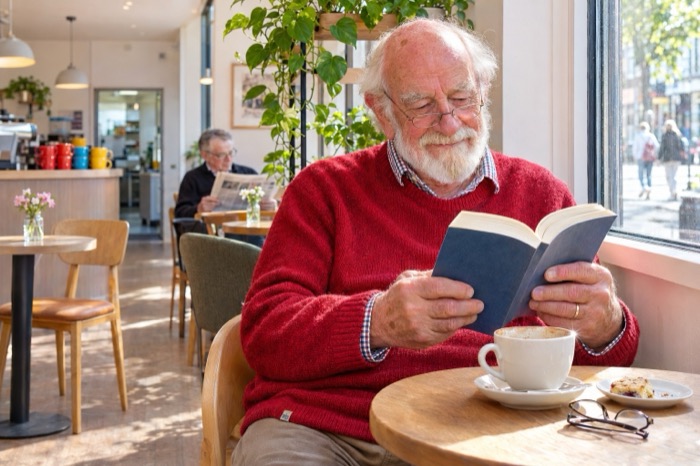
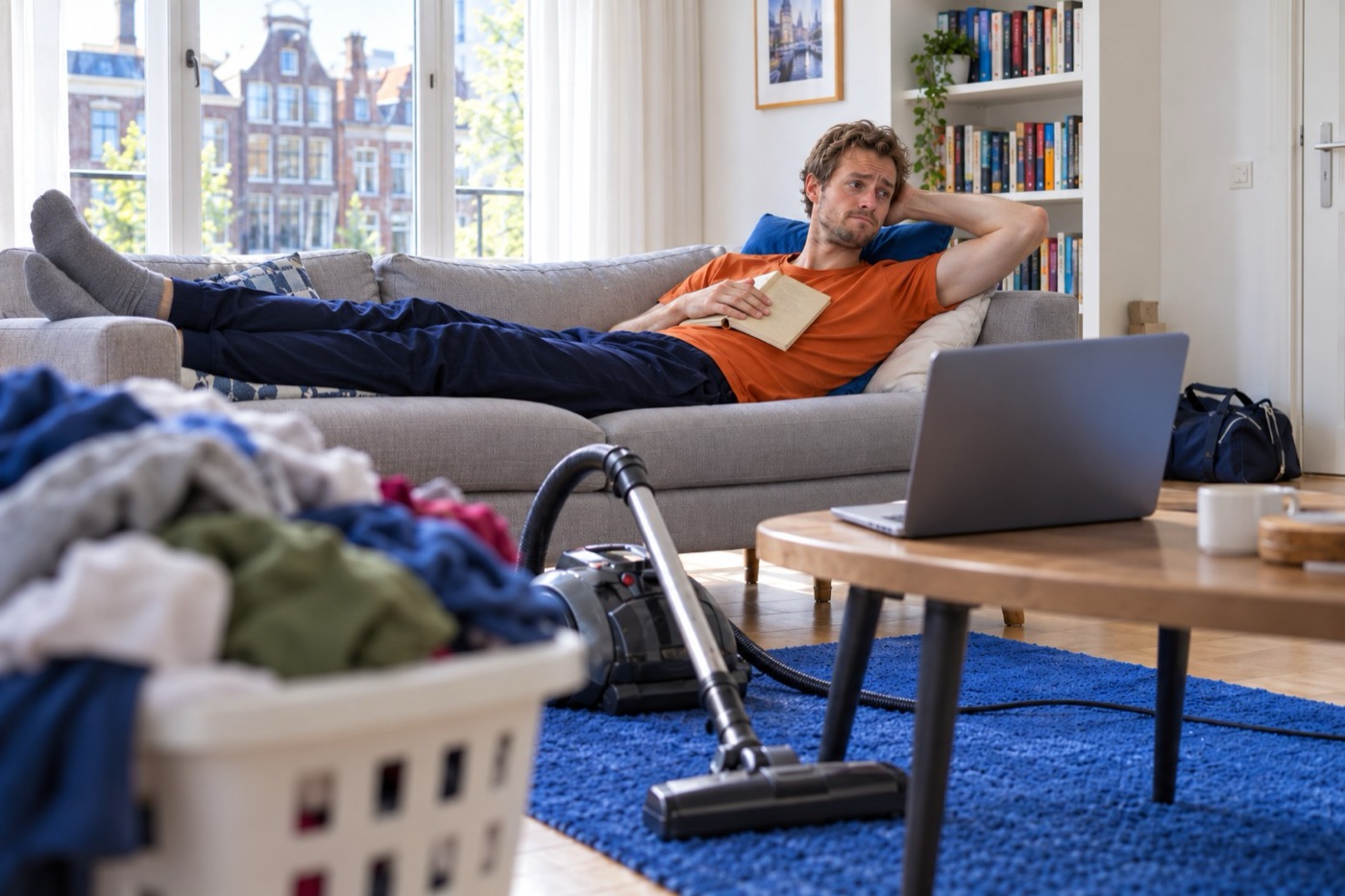
Picture a rare afternoon without plans. You could read, sit in a café or simply stare through the window. Yet instead of feeling peaceful, you begin thinking about everything you could be doing: reorganising the kitchen, improving your fitness or learning a language. Free time has somehow become another test of productivity.
For many people, the guilt starts before they have even sat down. An empty weekend looks like a problem to solve, rather than a welcome chance to slow down.
This feeling is sometimes called productivity guilt. The idea is that time only counts if we use it to achieve something visible. In a March 2026 interview with Nature, Joseph Jebelli, a neuroscientist who has written about rest, described how he had once measured his personal value by the hours he spent working. That is one person's account, not research evidence, but it names a feeling many people recognise.
There are reasons why this is difficult. People receive praise for working hard, and social media shows friends running marathons or launching businesses. Activities that should be relaxing can turn into goals. Even reading might feel like a challenge to complete a certain number of books every month.
But rest is not simply wasted time. Taking a break from a difficult task can reduce immediate pressure and may help people return with a clearer perspective. Walking, daydreaming and quiet conversation offer experiences that differ from checking another notification. The benefits depend on the person and circumstances; there is no single perfect way to relax. It can help to notice the language we use. We 'waste' an afternoon, 'fall behind' on plans or 'make up for' a lazy morning, as though relaxation creates a debt.
Of course, telling everybody to rest more ignores real inequalities. Some workers have unpredictable schedules, while parents and carers may rarely have uninterrupted time. Feeling guilty about resting can be a cultural habit, but the shortage of opportunities to rest is often a practical problem.
The pressure to optimise leisure can also change how we experience activities we once loved. A weekend walk becomes a fitness target, a hobby becomes a possible source of income and a holiday becomes an opportunity to collect impressive photographs. There is nothing inherently wrong with goals, but difficulty arises when every activity must produce evidence of progress. It can be useful to distinguish rest from entertainment and achievement.
Watching several fast-moving videos may be enjoyable without providing the same sense of recovery as a quiet conversation or an unhurried walk. Equally, the ideal break depends on personal circumstances. Someone who works alone all week may need company, while a person constantly dealing with customers may value silence. Allowing individual choice may be more useful than prescribing one fashionable routine.
Perhaps the most useful change is not another wellbeing routine. It is accepting that free time does not require a measurable result. You are allowed to enjoy an afternoon without turning it into an achievement.
Advanced version
The afternoon is free, but enjoying it is harder than expected. A thought keeps returning: should I be doing something useful? When even a walk or a quiet hour has to justify itself, taking a break can start to feel like failing at something.
In a March 2026 interview published by Nature, neuroscientist Joseph Jebelli reflected on measuring his worth through long working hours. He argued that periods of rest and mental wandering are not necessarily obstacles to effective thinking but can form part of it. That is an interview, not a study, but it challenges a culture that treats inactivity as a problem to be solved. Fitness trackers turn movement into targets, reading apps count completed books and career advice encourages constant professional development. These tools can be motivating, but their logic may also colonise activities that were once enjoyable precisely because they served no practical purpose.
There is a scientific dimension, although broad claims require caution. Recovery from demanding tasks matters, and stepping away from a problem can sometimes support fresh thinking. That does not establish that every nap increases creativity or that unstructured time produces identical benefits for everybody. Rest is influenced by sleep, stress, individual needs and the nature of the activity.
The argument also risks overlooking social realities. Telling an exhausted care worker or a single parent to prioritise downtime may sound absurd if their problem is insufficient control over their schedule. A culture of rest requires employers, families and public institutions to consider who actually has access to it. Perhaps the challenge is to defend time that produces no measurable result: an aimless conversation, a slow afternoon or a walk that leads absolutely nowhere in particular.
Even rest is sometimes defended only because it supposedly increases future productivity. That reasoning is persuasive to an employer, yet it leaves little room for experiences valuable simply because they are pleasurable. It is worth separating the instrumental benefits of recovery from the broader human need for freedom and enjoyment. A slow afternoon need not demonstrate improved cognitive performance to have been worthwhile. Perhaps the most radical response to productivity guilt is declining to measure everything in the first place.
Perhaps the deeper question is why leisure must be justified through improved performance at all. Rest may make us better workers, but its value does not depend solely on that outcome. The right to spend an hour doing nothing can be defended without turning it into yet another productivity technique.
After you read
4True, false or not given5 statements
Choose T (true), F (false) or NG (the article does not say).
- Rest can include sitting quietly or going for a slow walk.
The text says: "It might mean sitting quietly, going for a slow walk or looking out of the window."
- Every type of rest works the same way for everybody.
The text says: "not every type of rest works in exactly the same way for everybody."
- Jebelli's book became a bestseller.
Not stated. The text does not say how well the book sold.
- Nature interviewed Joseph Jebelli in March 2026.
The text says: "In March 2026, the science journal Nature spoke to neuroscientist Joseph Jebelli."
- The writer thinks every hobby should have a purpose.
The text says these activities "do not need to become jobs".
5Vocabulary5 gaps
Complete the sentences with words from the box. Two words are not needed.
approvecompetitioncomplicatedexpensivefinancialpurposeschedule
- Checking messages during a quiet moment can make relaxing more .
- Some people worry about bills and other problems when they try to rest.
- A day is not a , so you do not have to win it.
- Many people think a hobby must have a , such as improving their health.
- Other people do not need to of how you spend your free time.
6Verb forms5 gaps
Write the correct form of the verb in brackets.
- Many people find it difficult to relax without guilty. (FEEL)
- In March 2026, Nature to the neuroscientist Joseph Jebelli. (SPEAK)
- For years he that his value came from his work. (THINK)
- Talking to a friend enough to feel rested. (BE)
- He that breaks are important for difficult mental work. (ARGUE)
7Language focuslinking words
Complete the sentences with words from the box. Two words are not needed. Think about the link: is it a contrast, a reason, a result or a surprise? Read the whole sentence before you choose.
althoughbecauseespeciallyhoweverotherwisesounless
- I felt guilty, I enjoyed the walk.
- I turned my phone off I wanted a proper break.
- It was raining, we stayed at home.
- Rest is useful, for people who do difficult mental work.
- I wanted to relax. , I kept checking my messages.
4True, false or not given5 statements
Choose T (true), F (false) or NG (the article does not say).
- Jebelli's description of his own experience counts as research evidence.
The text says: "That is one person's account, not research evidence."
- The writer says guilt is the only reason people struggle to rest.
The text says the shortage of rest is "often a practical problem" too.
- Most people who feel productivity guilt are under thirty.
Not stated. The text gives no ages.
- Someone who talks to customers all day might want a quieter break than someone who works alone.
The text says a person dealing with customers "may value silence", while someone who works alone "may need company".
- The writer suggests that our language can make relaxation sound like a debt.
The text says we speak "as though relaxation creates a debt".
5Vocabulary6 gaps
Complete the sentences with words from the box. Two words are not needed.
approachcircumstancesdistinguishinequalitiesnotificationpraiseseparatevisible
- Employees who work hard often receive public from their managers.
- How much rest a person needs depends on their personal .
- It is not always easy to between real rest and simply being entertained.
- Achievements only seem to count when they are to other people, for example on social media.
- Telling everybody to rest more ignores social in who has free time.
- A single on your phone can pull your attention away from a quiet conversation.
6Verb forms5 gaps
Write the correct form of the verb in brackets.
- By the time she finally sat down on Saturday, she the whole kitchen. (CLEAN)
- Free time by many people as another test of productivity. (TREAT)
- You to enjoy an afternoon without turning it into an achievement. (ALLOW)
- If she hadn't felt so guilty, she the walk more. (ENJOY)
- The neuroscientist to Nature in March 2026. (SPEAK)
7Language focuslinking words
Complete the sentences with words from the box. Two words are not needed. Decide what the sentence needs: a contrast, a reason, an addition or a warning. Then check the grammar after the gap.
becauseinsteadmoreoverotherwiseunlesswhereasyet
- of feeling peaceful, she began planning jobs.
- Rest helps people think more clearly. , it can reduce pressure.
- That is only one person's account, not a study. , it names a feeling many people recognise.
- She felt guilty she had not achieved anything all day.
- Take regular breaks. , the pressure will keep growing.
4True, false or not given5 statements
Choose T (true), F (false) or NG (the article does not say).
- The writer implies that advice to rest more can be unrealistic for some people.
Telling a care worker or single parent to rest "may sound absurd" if they lack control over their schedule.
- The writer treats Jebelli's interview as stronger evidence than a scientific study.
The text calls it "an interview, not a study" and presents it as a challenge to a culture, not as proof.
- Jebelli became less productive after he changed his attitude to work.
Not stated. The text does not say what happened to his output.
- The writer finds the productivity defence of rest convincing to employers but incomplete.
It is "persuasive to an employer, yet it leaves little room for experiences valuable simply because they are pleasurable".
- The writer is certain that stepping away from a problem improves creativity.
The text says it "can sometimes support fresh thinking" and warns that broad claims "require caution".
5Vocabulary6 gaps
Complete the sentences with words from the box. Two words are not needed.
absurdcoloniseobstaclesoverlookingrelentlesssupposedlytangibleunstructured
- If every pastime is tracked and scored, the logic of performance may even our most private enjoyments.
- Advising a night-shift nurse to 'take more time for herself' can sound when her rota is set by someone else.
- An argument that ignores workers' schedules risks the practical barriers to rest.
- The break was for the sake of her health, though she spent it answering emails.
- Poorly designed shift patterns are major to genuine recovery.
- Children benefit from play, in which nobody sets the rules or the goals.
6Word forms5 gaps
Use the word in brackets to make a word that fits the gap.
- Her to take a day off made her colleagues worry. (RELUCTANT)
- The of leisure has turned many hobbies into side businesses. (COMMERCIAL)
- It would be to claim that every nap boosts creativity. (RESPONSIBLE)
- Critics find the argument because it ignores who can afford time off. (CONVINCE)
- Overwork often leads to , even among people who enjoy their jobs. (EXHAUST)
7Language focuslinking words
Complete the sentences with words from the box. Two words are not needed. Look at what follows each gap: a noun phrase, a full clause or a fragment. Some of these are formal and belong mainly in writing.
albeithencelestnonethelessnotwithstandingtherebywhereas
- The advice is useful, only for those who control their own schedules.
- Employers value rest as a means to higher output, the human case for it is that it is enjoyable.
- the pressure to optimise leisure, many people still guard one unplanned afternoon.
- The interview is anecdotal; , it challenges a culture that treats inactivity as a problem.
- Workers rarely control their time; , rest remains a privilege.
Speak
8Talk about it3 questions
Discuss in pairs or small groups. Give reasons for your answers.
- Should rest have to make you more productive afterwards?
- What would make a day feel worthwhile without achieving anything?
- Which everyday pressure makes switching off hardest?
8Talk about it3 questions
Discuss in pairs or small groups. Give reasons for your answers.
- Should rest have to make you more productive afterwards?
- What would make a day feel worthwhile without achieving anything?
- Which everyday pressure makes switching off hardest?
8Talk about it3 questions
Discuss in pairs or small groups. Give reasons for your answers.
- Should rest have to make you more productive afterwards?
- What would make a day feel worthwhile without achieving anything?
- Which everyday pressure makes switching off hardest?
9Role-play: an empty Sunday
Work in pairs. Read your card, then have the conversation. Swap roles and do it again.
Student A · the friend with a plan
You've got a free Sunday and you hate wasting it. Suggest a busy plan, such as a long run, a museum visit and some study. Explain why you think the day should be useful.
Student B · the friend who wants to rest
You want to do nothing on Sunday. Say why you need a quiet day and what you'd like to do instead. Try to agree on a plan that works for both of you.
Useful phrases
- I don't want to waste the whole day.
- Honestly, I just want to switch off.
- Shouldn't we do something useful?
- Why does everything have to be a plan?
- Could we do one thing and then relax?
- That's fair, let's try it your way.
Afterwards, tell the class: what did you agree, and who gave way more?
Your words
Highlights0 saved
Highlights0 saved
Highlights0 saved
Was this lesson useful? Support johnplusnews on Ko-fi
Continue reading
Work
Could a Better Job Be About Time, Not Money?
A global survey of 40,500 workers found that work-life balance has overtaken salary as the main reason people would consider leaving a job. What does that tell us about how people want to live?
Psychology
The Way You Think About Being Alone Changes How It Feels
Researchers read 144 newspaper articles about solitude and found them overwhelmingly gloomy. They also found that what you believe about time alone predicts how lonely it makes you.
Lifestyle
Can You Learn a Better Life from an Italian Grandmother?
Two friends in their late eighties bake bread in a small Italian town. The internet has decided they are the answer to something.