News lesson2025 to 2026
The Bed That Became a Negotiation
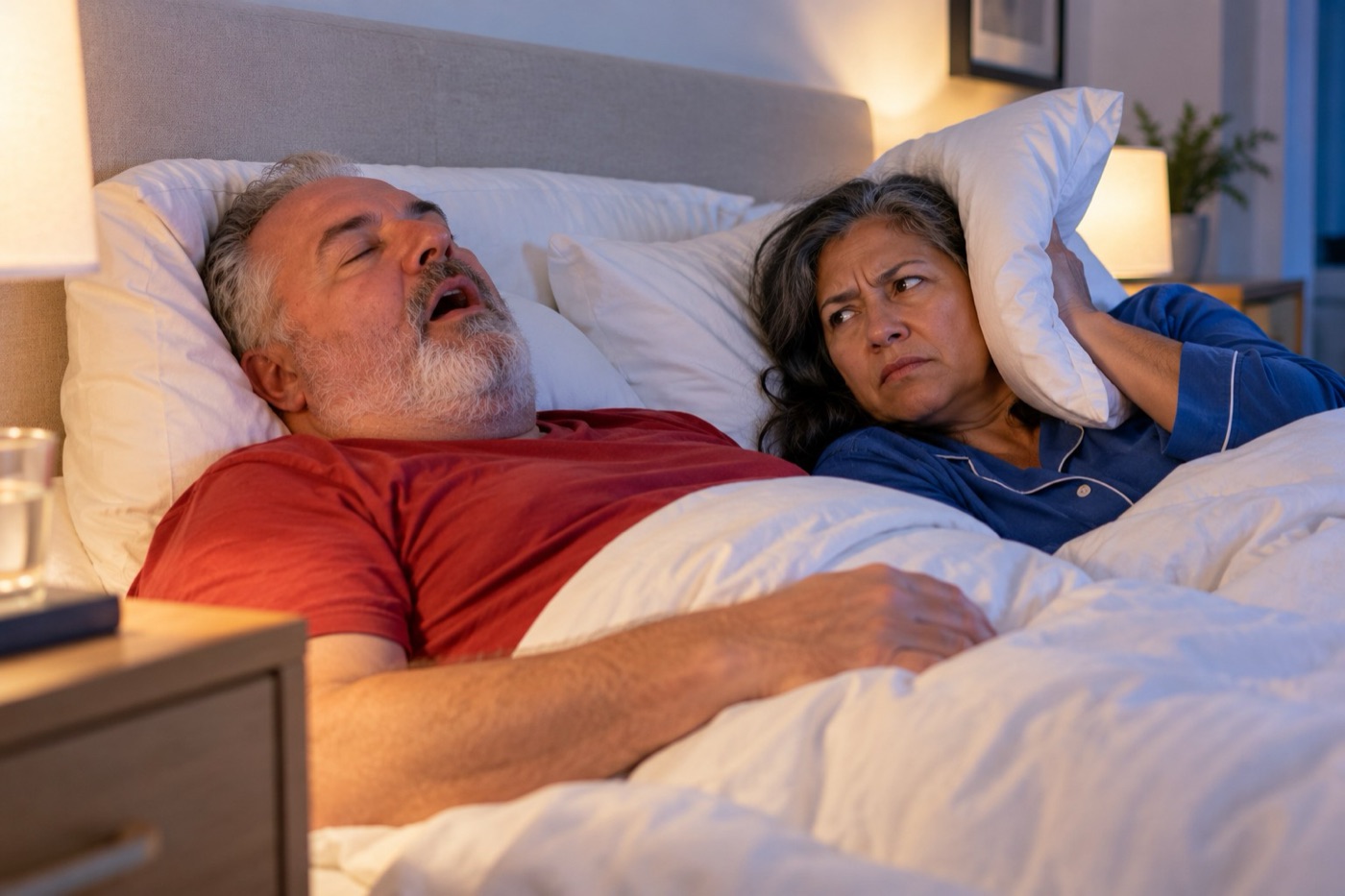
Open windows, late television and different alarms can wear a couple down. Separate rooms may help, though a small flat rarely leaves much space to experiment.
Before you read
1Warm up3 questions
Talk about these questions with a partner.
- Would separate beds make a relationship seem less close to you?
- Which matters more for sharing a space: routines or plenty of room?
- Why do some ordinary household choices make people feel judged?
2Key words8 words
These words are in the article. Choose the letter of the meaning for each one.
- snoring
- habits
- arguments
- comfort
- survey
- connected
- disaster
- energy
- Aa nice, safe and relaxed feeling
- Bsomething very bad that happens
- Cthe loud noise some people make through their nose or mouth when they sleep
- Dthings you do often, without thinking about it
- Ethe strength you need to do things
- Fclose to another person, with a good feeling between you
- Ga set of questions asked to many people to find out what they think or do
- Hangry talks between people who do not agree
1Warm up3 questions
Talk about these questions with a partner.
- Would separate beds make a relationship seem less close to you?
- Which matters more for sharing a space: routines or plenty of room?
- Why do some ordinary household choices make people feel judged?
2Key words8 words
These words are in the article. Choose the letter of the meaning for each one.
- symbol
- intimacy
- negotiation
- tension
- disturbance
- accusations
- willpower
- indicate
- Aa thing that stands for an idea or a feeling
- Ba feeling of worry or anger between people
- Cstatements that say someone did something wrong
- Da talk in which people try to reach an agreement
- Ea very close and loving feeling between two people
- Fto show that something is probably true
- Gsomething that interrupts your rest or quiet
- Hthe strong mind that helps you control what you do
1Warm up3 questions
Talk about these questions with a partner.
- Would separate beds make a relationship seem less close to you?
- Which matters more for sharing a space: routines or plenty of room?
- Why do some ordinary household choices make people feel judged?
2Key words8 words
These words are in the article. Choose the letter of the meaning for each one.
- clinging
- population
- chronic
- tolerance
- consequently
- proximity
- dignity
- negotiate
- Alasting for a long time or happening again and again
- Bthe ability to accept something annoying without getting angry
- Cto talk with someone to reach an agreement
- Dthe feeling of being respected and valued
- Ebeing very near to someone or something
- Fall the people who live in a place or belong to a group
- Gholding on tightly to something
- Has a result
Read
3Read the article
The paragraphs are numbered. Look out for the key words from task 2.
Core version
It is the middle of the night. One person is sleeping peacefully, but their partner lies awake and exhausted because of loud snoring. They try moving the pillow and turning over. Nothing helps. Would sleeping in another room be a terrible idea?
Some couples choose separate beds or bedrooms so they can get a good night's sleep. People sometimes call this a sleep divorce, although nobody is ending the relationship. They may love each other and enjoy spending time together but have very different habits at night.
There are many reasons for sleeping separately. One partner may snore, move around a lot or need a television on. The other may wake up easily or work different hours. In 2025, reporting on a US sleep survey suggested that separate sleeping arrangements were fairly common among adults.
For some couples, the change can mean fewer arguments and more energy during the day. However, other people enjoy sleeping close to someone they love. Sharing a bed can offer comfort and help them feel connected. There is no arrangement that suits every relationship.
Talking honestly is important. If a couple decides to sleep apart, they can still spend time together before bed or choose to share a room on some nights. A problem such as serious snoring may also need medical attention rather than only a different bedroom.
Couples can also try smaller changes before deciding to use separate bedrooms. One person may enjoy a cool room, while the other prefers warmer bedding. Different blankets might help. If a television keeps someone awake, headphones or watching in another room may be an option. People who work early shifts may need different bedtime routines.
It is important to talk about these things without making the other person feel responsible for every bad night. Nobody chooses to snore loudly or move while sleeping. And not everybody has a spare room at home. For some couples, separate bedrooms are not possible because they are too expensive. Good communication may help, but it cannot solve every practical problem. The aim is to find something that works for both people.
Perhaps the strangest thing about the phrase sleep divorce is that it makes a practical decision sound like a romantic disaster. Good relationships involve looking after each other. Sometimes that means sharing a bed. Sometimes it means letting the other person sleep.
Intermediate version
Sharing a bed is often treated as a symbol of a successful relationship. Yet anyone who has spent hours listening to a partner snore knows that intimacy and a good night's sleep do not always fit comfortably together. This tension has encouraged discussion of so-called sleep divorce: couples choosing separate sleeping arrangements without ending their relationship.
One partner may need the window open and the other may prefer a warm room. Add different alarms or a habit of watching television late, and bedtime can turn into a negotiation.
Reasons vary from different work schedules to restless movement, conflicting room temperatures and noise. A 2025 report discussing a survey carried out by the American Academy of Sleep Medicine suggested that sleeping separately was relatively common among US adults. The figures describe reported behaviour, not proof that separate bedrooms produce happier relationships.
There are possible advantages. Somebody who sleeps more peacefully may become less irritable and better able to enjoy time with their partner. Couples may also feel relieved when they stop blaming one another for interrupted nights. However, separate beds can reduce opportunities for closeness if the decision is not discussed openly.
The question is therefore more complicated than choosing between romance and rest. Some couples prefer separate rooms every night; others only sleep apart when one person has an early start or is unwell. Practical solutions such as earplugs, different bedding or agreed routines may also help. Sharing a bed also carries an emotional meaning. Friends or relatives might see separate bedrooms as a sign of trouble, even when the people involved are perfectly happy with the arrangement.
There are medical issues to consider. Regular loud snoring, particularly when linked to interrupted breathing or marked daytime sleepiness, can indicate a condition requiring assessment. Moving rooms may protect a partner's sleep without addressing the underlying problem.
Separate bedrooms are not an option for everybody. Couples in small flats may have little space to experiment and often simply have to put up with the disturbance. Moving to a larger home purely to improve sleep is financially unrealistic for many families. Less dramatic changes might help: separate duvets, different bedtimes, earplugs or agreed rules about noise and cutting down on screens late at night.
The best solution depends on the source of disturbance, the available space and how both people feel about the arrangement. It is also worth avoiding blame. Snoring or restless movement is not necessarily something a person can control through willpower. A discussion that focuses on practical needs rather than accusations is more likely to protect the relationship while addressing the sleep problem.
Rather than seeing bed-sharing as a test of love, couples might ask what allows both people to feel rested and connected. A relationship is built from communication, trust and everyday care. The location of two pillows is unlikely to tell the whole story.
Advanced version
One person snores. The other gets up early, likes a colder room or ends up clinging to the edge of the mattress. Sharing a bed can be intimate and thoroughly impractical. Sleeping separately may solve an ordinary problem, even if other people read it as a sign of trouble.
The expression sleep divorce describes an arrangement in which a couple chooses separate beds or rooms for better rest, without separating romantically. Reporting on a 2025 US sleep survey suggested that the practice was far from exceptional. Yet the popularity of a phrase does not establish whether the arrangement improves relationships or how widely it occurs outside the surveyed population.
There is a plausible argument in its favour. Chronic sleep disruption can affect mood, attention and tolerance, making everyday disagreements more difficult to manage. A couple who both sleep better may consequently have more energy for their relationship. However, physical closeness can also be reassuring, and one partner may feel lonely or rejected if they experience the decision differently. For some couples it is a temporary experiment; for others, an ordinary routine that protects both people's rest.
Rather than treating separate sleeping as a permanent binary choice, some couples negotiate flexible arrangements. They may share a bedroom most nights while allowing separate space during illness or demanding working periods. Others look into temperature, bedding or bedtime routines before changing rooms. The relevant measure of success is whether the arrangement suits both people.
Practical solutions should not replace medical attention when it is needed. Loud habitual snoring accompanied by breathing interruptions, for example, may indicate sleep apnoea. Reducing disturbance to a partner can be worthwhile, but the underlying cause should not be brushed aside. What matters is whether both partners have a say. Separate bedrooms imposed by one person are different from a decision discussed openly, with closeness maintained in other ways.
Housing conditions complicate the fashionable presentation of sleep divorce as a straightforward lifestyle choice. Separate rooms require space that many couples, particularly those facing high rents or crowded housing, simply do not have. Even separate beds may be impractical. Other arrangements, including different duvets, adjusted bedtimes or changes to light and noise, may be more realistic.
The language used between partners also matters. Sleep disruption is often involuntary, and framing it as somebody's fault can turn a practical difficulty into an emotional conflict. Couples benefit from discussing their needs without making physical proximity the sole measure of affection. Whatever the arrangement, both partners should feel that the decision respects their comfort, dignity and desire for closeness.
The wider debate reveals how readily cultural expectations become mistaken for relationship rules. Two people can share a bed and feel emotionally distant, or sleep in different rooms and maintain a close partnership. Rather than holding up one arrangement as the romantic ideal, perhaps couples should be encouraged to discuss sleep as they would any other shared responsibility: honestly and without embarrassment.
After you read
4True, false or not given5 statements
Choose T (true), F (false) or NG (the article does not say).
- Separate bedrooms suit every relationship.
The text says the opposite: "There is no arrangement that suits every relationship."
- Most couples who try separate rooms go back to sharing.
The text does not say whether couples who try separate rooms go back to sharing.
- Couples who sleep separately have not ended their relationship.
The text says: "People sometimes call this a sleep divorce, although nobody is ending the relationship."
- Using different blankets is one way couples might solve a problem.
The text says: "Different blankets might help."
- Headphones are one idea for a person who cannot sleep because of a television.
The text says: "headphones or watching in another room may be an option."
5Vocabulary5 gaps
Complete the sentences with words from the box. Two words are not needed.
exhaustedexpensivemedicalpracticalresponsibleromanticspare
- The baby cried all night, so both parents felt the next morning.
- We keep a key under the flowerpot in case we get locked out.
- Nobody wants to buy a bigger flat if it is too .
- Using earplugs is a way to cope with noise, and it costs very little.
- Parents are for keeping their children safe.
6Verb forms5 gaps
Write the correct form of the verb in brackets.
- They try the pillow and turning over. (MOVE)
- Although nobody the relationship, people call it a sleep divorce. (END)
- In 2025, a survey that separate sleeping was fairly common. (SUGGEST)
- If a couple decides apart, they can still share evenings. (SLEEP)
- Nobody to snore loudly. (CHOOSE)
7Language focusphrasal verbs
Complete the sentences with words from the box. Two words are not needed. A phrasal verb is a verb with a small word like up or back. The small word changes the meaning, so learn the two words together.
apartaroundbackoffoverthroughup
- The baby turned onto her back.
- I woke when my neighbour's alarm rang.
- Some couples sleep but stay close in other ways.
- My son moves a lot in his sleep.
- Many couples go to sharing a bed after a few weeks.
4True, false or not given5 statements
Choose T (true), F (false) or NG (the article does not say).
- Younger couples are more likely to sleep apart.
The text does not say which age groups are more likely to sleep apart.
- The survey in the report came from an American sleep medicine organisation.
The text says: "a survey carried out by the American Academy of Sleep Medicine"
- The figures prove that separate bedrooms make couples happier.
The text says the opposite: "The figures describe reported behaviour, not proof that separate bedrooms produce happier relationships."
- Some couples cannot sleep in separate rooms.
The text says: "Separate bedrooms are not an option for everybody."
- The text suggests that moving to a bigger home is an easy answer for many families.
The text says moving house for sleep is "financially unrealistic for many families".
5Vocabulary6 gaps
Complete the sentences with words from the box. Two words are not needed.
emotionalinterruptedirritablerelievedsuccessfulunderlyingunrealisticunwell
- After three nights of broken sleep, she became so that she snapped at her colleagues over small things.
- She felt when the noisy builders finally left, and she slept well that night.
- Buying a second home so each partner has a bedroom is for most families.
- Her son was too to go to school, so she took him to the doctor.
- For many people, losing a parent is an experience.
- The rash was only a symptom; the problem was an allergy.
6Verb forms5 gaps
Write the correct form of the verb in brackets.
- By the time her partner came to bed, she asleep. (FALL)
- Earplugs by many couples as a simple solution. (USE)
- If he wears earplugs tonight, he better. (SLEEP)
- The couple separate rooms last year and say they feel happier. (CHOOSE)
- Noise from the street them awake since they moved in. (KEEP)
7Language focusphrasal verbs
Complete the sentences with words from the box. Two words are not needed. Many phrasal verbs have a meaning you cannot guess from the parts. Check that the particle matches the whole idea, such as work out for solve.
alongawaybackdownoutoverup
- After years of broken sleep, they finally worked a routine that suited them both.
- A warm shower can help people calm before bed.
- He was afraid to bring the subject of snoring.
- After a month apart, they decided to go to sharing a room.
- He hoped the problem would simply go .
4True, false or not given5 statements
Choose T (true), F (false) or NG (the article does not say).
- The writer would still call a couple close if they slept in different rooms.
The text says two people can "sleep in different rooms and maintain a close partnership".
- According to the text, couples who share a bed are always emotionally close.
The text says two people "can share a bed and feel emotionally distant".
- Couples who sleep in separate beds divorce less often than those who share.
The text gives no figures about divorce or separation rates.
- Sleeping apart is likely to be easier for couples who live in larger homes.
The text says separate rooms "require space that many couples ... simply do not have".
- The writer believes that separate bedrooms fully solve the problem of loud snoring.
The text warns that the "underlying cause should not be brushed aside" and may be sleep apnoea.
5Vocabulary6 gaps
Complete the sentences with words from the box. Two words are not needed.
accompaniedbinaryframingimposedintimateinvoluntaryreadilysole
- Blinking is largely : we do it thousands of times a day without ever deciding to.
- A curfew by one flatmate on all the others is unlikely to last long.
- Cost should not be the criterion when a family chooses a school.
- Rumours are believed when they confirm what people already suspect.
- A persistent cough may be by a fever, in which case a doctor should be consulted.
- By the cuts as efficiency savings, the minister hoped to escape criticism.
6Word forms5 gaps
Use the word in brackets to make a word that fits the gap.
- Physical closeness can also be . (ASSURE)
- Chronic sleep can affect mood and attention. (DISRUPT)
- Loud snoring may indicate sleep apnoea. (HABIT)
- Housing conditions complicate the presentation of the idea. (FASHION)
- The findings have wider for how couples think about intimacy. (IMPLY)
7Language focusphrasal verbs
Complete the sentences with words from the box. Two words are not needed. Several of these verbs are idiomatic, so read the whole sentence before you choose a particle.
alongapartasidedownintoonup
- The underlying cause of the snoring should not be brushed .
- The couple agreed to look quieter mattresses before changing rooms.
- Nobody should hold one sleeping arrangement as the ideal for every couple.
- Months of broken sleep had begun to wear her .
- They decided to sleep it before making a final decision.
Speak
8Talk about it3 questions
Discuss in pairs or small groups. Give reasons for your answers.
- Should a couple explain sleeping separately to anyone else?
- What other relationship rule deserves to be questioned?
- What would make a practical compromise feel caring rather than distant?
8Talk about it3 questions
Discuss in pairs or small groups. Give reasons for your answers.
- Should a couple explain sleeping separately to anyone else?
- What other relationship rule deserves to be questioned?
- What would make a practical compromise feel caring rather than distant?
8Talk about it3 questions
Discuss in pairs or small groups. Give reasons for your answers.
- Should a couple explain sleeping separately to anyone else?
- What other relationship rule deserves to be questioned?
- What would make a practical compromise feel caring rather than distant?
9Role-play: your snoring or my sleep
Work in pairs. Read your card, then have the conversation. Swap roles and do it again.
Student A · the partner who cannot sleep
You have lain awake for weeks because of your partner's snoring. You want to try separate rooms. Explain how tired you are, but do not hurt your partner's feelings.
Student B · the partner who snores
You feel hurt that your partner wants a separate room. Say how you feel and suggest other ideas first, such as earplugs or different bedtimes. Agree to something if the plan is fair.
Useful phrases
- I'm exhausted, and I can't go on like this.
- It doesn't mean I love you any less.
- Could we try earplugs first?
- Let's try it for a month and see.
- I'd feel lonely without you next to me.
- We're not ending anything, we're just sleeping better.
Afterwards, tell the class: did you agree on a plan, and was it fair for both people?
Your words
Highlights0 saved
Highlights0 saved
Highlights0 saved
Was this lesson useful? Support johnplusnews on Ko-fi
Continue reading
Technology
Can You Be Emotionally Close to Someone Who Is Not Human?
A survey of 463 adults in the United States found that people in relationships with AI chatbots can feel as emotionally close as other couples, but the link between closeness and loneliness looked different.
Relationships
Would You Sign a Contract Before Getting Married?
More young Americans are signing prenuptial agreements before their weddings. Is planning for a divorce unromantic, or is it honest and sensible?
Psychology
The Way You Think About Being Alone Changes How It Feels
Researchers read 144 newspaper articles about solitude and found them overwhelmingly gloomy. They also found that what you believe about time alone predicts how lonely it makes you.