News lessonOctober 2026
What Is It Like to Live Next to a Data Centre?
Britain is building data centres to power artificial intelligence. In Newport and Cardiff, the people living beside them are asking who benefits.
Before you read
1Warm up3 questions
Talk about these questions with a partner.
- What happens to a photo when you save it online?
- Is there a large new building near your home? What do people think of it?
- Who should decide what gets built in a neighbourhood?
2Key words8 words
These words are in the article. Choose the letter of the meaning for each one.
- lawn
- stream
- chatbot
- generators
- disgusting
- backed
- concrete
- shifts
- Athe short grass in a garden
- Bthe hours of the day that you work, for example at night
- Cvery bad and unpleasant
- Dthe hard grey material used to build walls and roads
- Eto watch a film or listen to music over the internet
- Fa computer program that answers your questions in writing
- Gmachines that make electricity
- Hsaid you agreed with a plan and helped it
1Warm up3 questions
Talk about these questions with a partner.
- Where do you imagine your files and photos are actually stored?
- What should a company offer a neighbourhood before building something large there?
- Is it possible to want new technology and object to a particular project?
2Key words8 words
These words are in the article. Choose the letter of the meaning for each one.
- hyperscale
- prefabricated
- campus
- drone
- fumes
- councillors
- signatures
- turbines
- Apeople's names written by hand, for example on a petition
- Bpeople chosen to make decisions for a town or city
- Cmachines with large blades that make power
- Da low, steady sound that goes on and on
- Every large, built to hold huge numbers of computers
- Fa large area of land with a group of buildings on it
- Gmade in a factory and put together on the building site
- Hstrong, unpleasant smoke or gas
1Warm up3 questions
Talk about these questions with a partner.
- Who should bear a local cost for a benefit that is shared nationally?
- Does the language we use for technology, such as “the cloud”, change how we think about it?
- When is a planning objection about a project, and when is it about change itself?
2Key words8 words
These words are in the article. Choose the letter of the meaning for each one.
- hyperscale
- prefabricated
- fringe
- triumph
- scaremongering
- commissioned
- campus
- turbines
- Aspreading fear by exaggerating a danger
- Ba large site holding a group of related buildings
- Cdescribes a data centre of enormous size
- Dbuilt in sections elsewhere and assembled on site
- Eofficially asked and paid someone to produce something
- Fthe outer edge of a town or city
- Ga great success, often one that surprises people
- Hmachines with blades that turn to generate power
Read
3Read the article
The paragraphs are numbered. Look out for the key words from task 2.
Core version
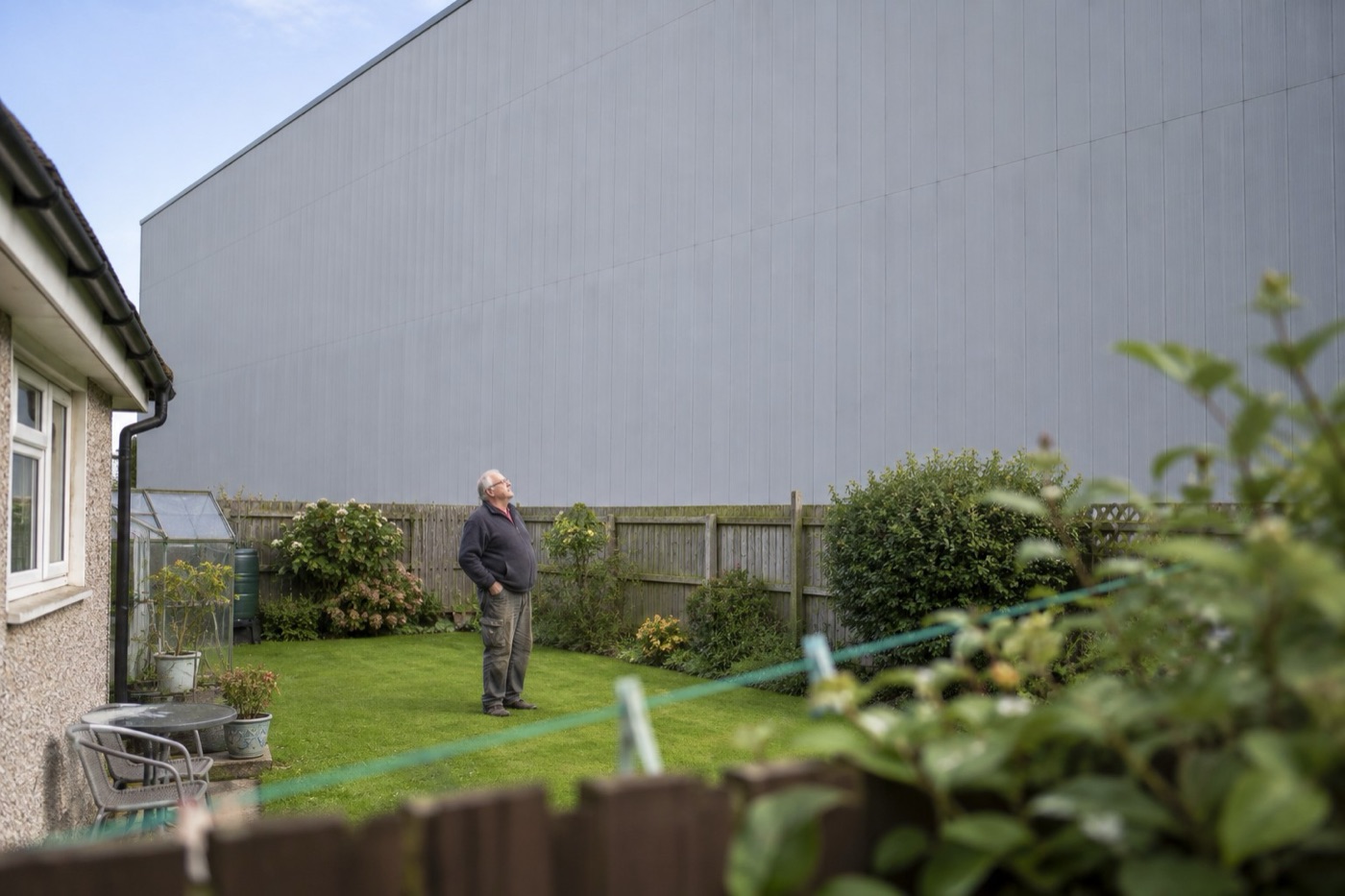
Dale Johnston has a garden on the edge of Newport, in south Wales. There is a trampoline and a slide on the lawn for his grandchildren, and two chairs for him and his wife. On an autumn evening he should be watching the light fade out of the sky. Instead he looks at a wall of grey panels 23 metres high.
The building is a data centre. Inside are thousands of computers that store information and run online services. When you save a photo, stream a film or ask a chatbot a question, machines in a building like this one may be doing the work. Artificial intelligence needs a great deal of computing power, so companies are building more of these centres and making them much bigger.
Local politicians have welcomed the Newport centre as a source of jobs. Johnston is thinking about what he has lost. “Before, the sun used to come around here and it was lovely,” he told the Guardian. He says the way residents have been treated is “disgusting”, and that the politicians who backed the project will not come to his garden to look at it.
He is worried about noise as well as light. The centre has 36 sets of large coolers to stop the computer chips overheating, and 60 back-up generators that have to be tested regularly. He already keeps his bathroom window shut because of a hum from another building on the same site. His wife is a nurse who works night shifts, and she struggles to sleep.
Newport is not the only place having this argument. In Britain, 315 big data centres are waiting for a connection to the electricity network. Together they have asked for far more power than the country normally uses on a cold winter day. That number is a request, not a measurement. Nobody yet knows how much electricity each building will really use, because that depends on how it is built and run.
In Cardiff, people are fighting a plan to put a data centre on a car park used by hospital staff. More than 1,200 people have objected to it.
Johnston can talk about little else. The internet is often called a cloud, which sounds light and far away. His garden is a reminder that it is made of concrete, and that it has to stand somewhere.
Intermediate version
Dale Johnston's garden on the western edge of Newport has a trampoline, a slide and two chairs. It also has a view of 23 metres of grey prefabricated panelling, because a hyperscale data centre now stands behind his small enclave of 27 houses. “Before, the sun used to come around here and it was lovely,” he told the Guardian.
Data centres hold the computers that store and process information for the services most of us use every day. Artificial intelligence has made them far hungrier for space and electricity, and the industry argues that only larger and larger facilities can meet the demand. In Britain, 315 hyperscale centres are queuing to connect to the national grid. The power they have applied for adds up to considerably more than the country's typical peak demand on a cold winter day, although an application is not the same as a measurement of what will actually be consumed.
Johnston's objections are specific rather than abstract. The centre has 36 sets of air blast coolers to stop its chips overheating, and 60 diesel back-up generators that will be tested regularly to protect the flow of data. He expects a constant drone and worries about fumes. He already closes his bathroom window against the hum of another building on the same 46-acre campus, and his wife, a nurse on night shifts, can barely sleep. Labour politicians presented the project as a job creator. Johnston says he has invited councillors and MPs to stand in his garden, and that none of them has come.
In Cardiff, a similar argument is louder. The council wants to sell a park and ride used by hospital staff to a developer planning a data facility. More than 1,200 objections have been lodged, and the Welsh government has ordered the council to pause the application. Sue Elias, a retired librarian, has leafleted the car park every Wednesday for six weeks and collected 1,300 signatures. Nick Richards, who moved onto a new estate two months before the application appeared, lives 300 metres from a proposed energy centre with seven gas turbines. “I feel trapped,” he says. The developer says the scheme cannot proceed without full compliance with environmental and public health rules, and air quality assessments it commissioned estimate that emissions will be within safe levels.
The councillor who defended the Cardiff plan argued that some of the claims circulating were scaremongering, and noted that the centre would employ up to 125 people once built. Three weeks after a packed public meeting in a local boxing club, he submitted a formal objection of his own.
Advanced version
The word cloud was a marketing triumph. It made a global industrial estate sound like weather. For Dale Johnston, the part of the cloud nearest his house is 23 metres of grey prefabricated panelling, standing behind an enclave of 27 homes on the western fringe of Newport. He has a trampoline and a slide out for his grandchildren and, as of this year, very little sky.
Johnston's case against the hyperscale data centre beside him is not a case against computing. It is a list: 36 sets of air blast coolers that will most likely hum continuously, 60 diesel generators that must be tested so the flow of data is never interrupted, a bathroom window he already keeps shut against noise from another building on the same 46-acre campus, and a wife on night shifts who cannot sleep. The politicians who welcomed the development as a job creator have, he says, declined his invitation to come and see it.
The national figures explain why this conversation is spreading. Britain has 315 hyperscale data centres queuing for a grid connection, and their combined requests substantially exceed the country's typical peak winter demand. That comparison deserves care: it describes what developers have applied for, not electricity anyone has used, and real consumption will depend on how each facility is designed, cooled and operated. Globally, spending on new capacity has been estimated in the trillions of dollars by 2030, which indicates how much of this is a speculative bet on an AI-led economy rather than a response to demand already in evidence.
What makes the politics awkward is distribution. The services these buildings support are used almost everywhere, while the panels, turbines and generators stand in particular postcodes, often poorer ones. In Cardiff, a council wants to sell a park and ride relied on by hospital staff to a data centre developer. Residents have lodged more than 1,200 objections, a retired librarian has gathered 1,300 signatures, and a filmmaker who moved onto a new estate two months before the planning application arrived now lives 300 metres from seven proposed gas turbines. The developer says the scheme cannot proceed without full regulatory compliance, and the air quality assessments it commissioned put emissions within safe limits. Residents are being asked to find that reassuring.
There is a serious case on the other side, and it is not only about employment, since the Cardiff facility would itself employ up to 125 people. Publicly owned computing can do obvious good: a university supercomputer in Bristol supports dementia and heart disease research. Campaigners who have actually read the planning documents tend to argue for enforceable standards and public ownership rather than outright refusal.
The most instructive detail is what happened to the councillor who called the objections scaremongering. Three weeks after a boxing club filled up with his own constituents, he submitted a formal objection himself.
After you read
4True, false or not given5 statements
Choose T (true), F (false) or NG (the article does not say).
- Johnston's garden used to get more sun than it does now.
The text says: “Before, the sun used to come around here and it was lovely.”
- The politicians who supported the project have visited his garden.
The text says the politicians “will not come to his garden to look at it”.
- The 315 data centres have asked for more power than Britain normally uses on a cold winter day.
The text says they have asked for “far more power than the country normally uses on a cold winter day”.
- The Newport data centre will employ more than 100 people.
Not stated. The text does not give a number of jobs for the Newport centre.
- The number 315 shows how much electricity the centres are using.
The text says: “That number is a request, not a measurement.”
5Vocabulary5 gaps
Complete the sentences with words from the box. Two words are not needed.
approvedconnectedenormousobjectedregularlyrequeststruggles
- The new stadium is . It is bigger than any other building in the town.
- Smoke alarms should be tested , for example once a month.
- Several neighbours to the new road because of the traffic.
- He sent a to the council, asking them to cut the grass near the school.
- My neighbour to sleep because the music from the party next door is so loud.
6Verb forms5 gaps
Write the correct form of the verb in brackets.
- Before the building arrived, Johnston the sun in his garden every evening. (ENJOY)
- Local politicians the Newport centre as a source of jobs. (WELCOME)
- Johnston is thinking about what he . (LOSE)
- In Britain, 315 big data centres for a connection to the electricity network. (WAIT)
- Nobody yet how much electricity each building will really use. (KNOW)
7Language focusprepositions
Complete the sentences with words from the box. Two words are not needed. Many words go with one small word. Learn them together, for example worried about.
aboutatforinontowith
- Johnston is worried the noise from the generators.
- The council is responsible deciding where the building goes.
- How loud the generators are depends where you stand.
- Local people have complained the council about the noise.
- Johnston does not agree the politicians who backed the project.
4True, false or not given5 statements
Choose T (true), F (false) or NG (the article does not say).
- The Welsh government has become involved in the Cardiff application.
The text says the government “has ordered the council to pause the application”.
- Sue Elias has been collecting signatures for less than a month.
The text says she has leafleted “every Wednesday for six weeks”.
- Hospital staff who use the park and ride will be given a new car park.
Not stated. The text says nothing about a replacement car park.
- The councillor who called some claims scaremongering later objected to the plan himself.
The text says he “submitted a formal objection of his own” three weeks after the meeting.
- Nick Richards moved to the area after the application was made.
The text says he moved there “two months before the application appeared”.
5Vocabulary6 gaps
Complete the sentences with words from the box. Two words are not needed.
commissionedcomplianceconsumedemissionsenclavelodgedproceedscaremongering
- The old village is now a small surrounded by new roads and warehouses.
- Residents have a formal complaint with the council.
- The company says that from the generators will stay within safe levels.
- The developer a report from independent experts on air quality.
- Supporters of the plan accused the campaigners of , saying they were frightening people without evidence.
- The scheme cannot until the council has approved it.
6Verb forms5 gaps
Write the correct form of the verb in brackets.
- Nick Richards onto the estate only two months earlier when the application appeared. (MOVE)
- The park and ride by hospital staff every day. (USE)
- If the plan goes ahead, heavy lorries the narrow road every day. (USE)
- Local people outside the council offices since early morning. (PROTEST)
- Three weeks after the packed meeting, the councillor a formal objection. (SUBMIT)
7Language focusprepositions
Complete the sentences with words from the box. Two words are not needed. Nouns, verbs and adjectives often take a fixed preposition. Learn them as chunks: objections to, rely on, interest in.
atforinofontowith
- The developer has applied planning permission.
- Residents have strong objections the plan.
- Hospital staff rely the car park every day.
- The project cannot go ahead without full compliance safety rules.
- The council has shown little interest their views.
4True, false or not given5 statements
Choose T (true), F (false) or NG (the article does not say).
- The writer treats the developer's reassurances with some scepticism.
The text says: “Residents are being asked to find that reassuring.”
- The power figure for the 315 centres proves that the grid will be unable to cope.
The text says the figure “describes what developers have applied for, not electricity anyone has used”.
- The Cardiff developer is a British company.
Not stated. The text never says where the developer is based.
- The Cardiff facility would create fewer than 150 jobs.
The text says it “would itself employ up to 125 people”.
- The councillor submitted his objection before the public meeting.
The text says he did so “three weeks after” the boxing club meeting.
5Vocabulary6 gaps
Complete the sentences with words from the box. Two words are not needed.
compliancedeclineddistributionenforceableexceedoutrightreassuringspeculative
- Investors who back unproven technology are placing a bet that may never pay off.
- A promise to cut noise means little unless it is written into an agreement with penalties for breaking it.
- The minister to comment on the proposals, saying she needed more time.
- After weeks of hearing about fumes, the residents found the developer's promise anything but .
- Few campaigners demand an ban on data centres; most want tighter rules instead.
- Experts warn that the energy demand of the new sites could what the national grid can supply.
6Word forms5 gaps
Use the word in brackets to make a word that fits the gap.
- Johnston's to the building is not a rejection of computing itself. (OPPOSE)
- Critics say the developer's claims about emissions are because the company paid for the assessments. (RELY)
- Supporters argue that the facility will bring benefits, such as skilled jobs. (ECONOMY)
- A consultation that never explains the noise levels is . (ADEQUATE)
- Developers should be made more for the harm their buildings cause. (ACCOUNT)
7Language focusprepositions
Complete the sentences with words from the box. Two words are not needed. At this level the preposition sits inside a fixed phrase. Learn the whole phrase: at odds with, fall short of.
forfrominofontowith
- The outcome of the appeal hinges whether the developer can prove that emissions are safe.
- The developer cannot be held liable delays caused by the grid operator.
- Few residents are favour of a plant that will run day and night.
- Several residents are at odds the council over the sale of the car park.
- Consultation on the plan fell short what residents were promised.
Speak
8Talk about it3 questions
Discuss in pairs or small groups. Give reasons for your answers.
- Would you live next to a building like this if your rent were cheaper?
- Johnston says politicians will not visit his garden. Why might that matter?
- Which online service would you find hardest to give up?
8Talk about it3 questions
Discuss in pairs or small groups. Give reasons for your answers.
- The power figure is an application, not a measurement. Why is that distinction important?
- Up to 125 jobs for a facility of that size: is that a strong argument?
- How should a council consult people who have just moved into an area?
8Talk about it3 questions
Discuss in pairs or small groups. Give reasons for your answers.
- The councillor reversed his position after meeting residents. Is that weakness or representation?
- Campaigners want standards and public ownership rather than refusal. Is that a realistic position?
- If a country decides it needs this infrastructure, how should it choose where it goes?
9Role-play: a data centre next door
Work in pairs. Read your card, then have the conversation. Swap roles and do it again.
Student A · the resident
A company wants to build a data centre behind your street. Tell the company what worries you, such as noise, fumes or lost sunlight. Ask for changes before you will agree.
Student B · the company's representative
You want to build the data centre. Explain the benefits, such as jobs. Listen to the resident, then offer one or two changes. You cannot agree to everything.
Useful phrases
- I'm really worried about the noise.
- We've lived here for years.
- That's not good enough for us.
- I'd like to hear more about the jobs.
- We're happy to listen to your concerns.
- Could we find a compromise?
Afterwards, tell the class: did you reach an agreement, and was it fair to the people living nearby?
Your words
Highlights0 saved
Highlights0 saved
Highlights0 saved
Was this lesson useful? Support johnplusnews on Ko-fi
Continue reading
Language
Did Writing Really Make Languages More Complicated?
A large study of about 100,000 sentences in 30 languages found no universal pattern showing that writing makes sentences more complex. It does not say that writing never changes a language.
Technology
Can You Be Emotionally Close to Someone Who Is Not Human?
A survey of 463 adults in the United States found that people in relationships with AI chatbots can feel as emotionally close as other couples, but the link between closeness and loneliness looked different.
Relationships
Would You Sign a Contract Before Getting Married?
More young Americans are signing prenuptial agreements before their weddings. Is planning for a divorce unromantic, or is it honest and sensible?