News lesson1 October 2026
The Queue, the Price and the Disappearing Cheap Seats
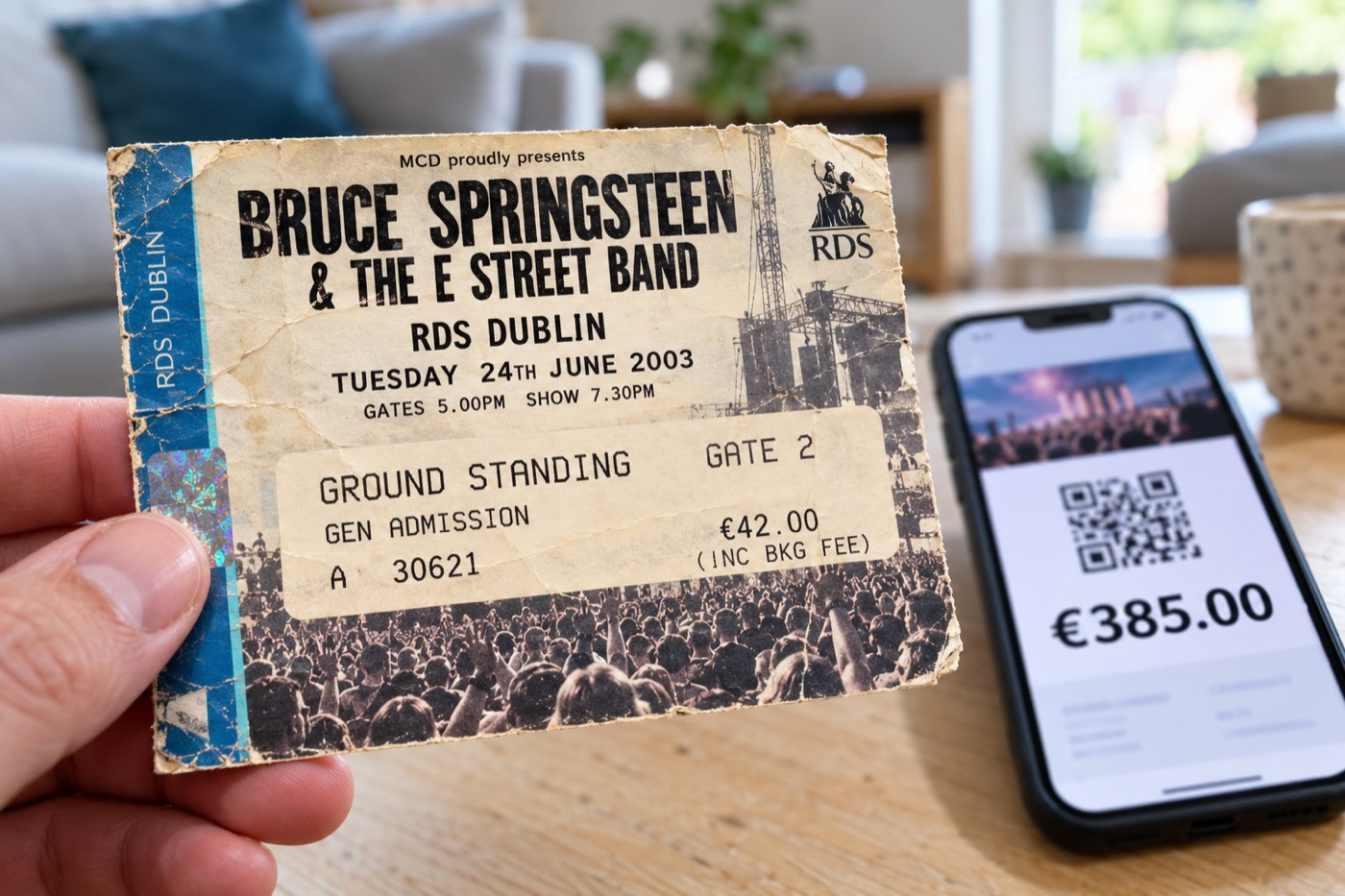
Dynamic pricing, booking fees and standing tickets that vanish in seconds have changed what a night out costs. Who gets left outside?
Before you read
1Warm up3 questions
Talk about these questions with a partner.
- What makes a concert worth saving up for?
- Would you rather sit close once or go to several cheaper gigs?
- Can watching a live performance on a screen still feel special?
2Key words8 words
These words are in the article. Choose the letter of the meaning for each one.
- familiar
- technicians
- resale
- reunion
- stadium
- pressure
- authority
- damage
- Aa strong feeling that you must do something
- Ban official group that makes sure rules are followed
- Cto hurt or make something worse
- Da very big place where many people watch sport or music
- Eselling something that you bought before
- Fpeople who work with the machines and lights at a show
- Gwhen a band comes back together after a long time
- Hsomething you know well because you have seen it many times
1Warm up3 questions
Talk about these questions with a partner.
- What makes a concert worth saving up for?
- Would you rather sit close once or go to several cheaper gigs?
- Can watching a live performance on a screen still feel special?
2Key words8 words
These words are in the article. Choose the letter of the meaning for each one.
- tiered
- resale
- commitments
- enormous
- struggle
- reunion
- treat
- promoters
- Aserious promises to do something
- Barranged in different levels, for example of price
- Cto find something very hard to do or survive
- Dsomething special that you enjoy but do not have often
- Epeople or companies that organise and advertise events
- Fextremely big
- Gwhen a band comes back together after a long time
- Hselling something that you bought before
1Warm up3 questions
Talk about these questions with a partner.
- What makes a concert worth saving up for?
- Would you rather sit close once or go to several cheaper gigs?
- Can watching a live performance on a screen still feel special?
2Key words8 words
These words are in the article. Choose the letter of the meaning for each one.
- algorithmic
- distortion
- catch-all
- mark-ups
- tiered
- obliged
- exposure
- unease
- Aa change that makes something less fair or accurate
- Barranged in different levels, for example of price
- Cthe chance for many people to see or hear you
- Da worried feeling that something is not right
- Eamounts added to a price to make a profit
- Fcontrolled by a computer process that follows set rules
- Gforced by a rule or duty to do something
- Hcovering many different things in one general way
Read
3Read the article
The paragraphs are numbered. Look out for the key words from task 2.
Core version
Imagine waiting online for hours to buy tickets for your favourite singer. When you finally reach the front of the queue, the cheapest tickets are gone. The ones left cost much more than you expected. This experience has become familiar to many music fans, especially young people who do not have a lot of money to spend.
Big concerts are expensive to organise. Artists need to pay musicians, technicians, security staff and many other workers. There is equipment to move between cities and large venues to prepare. Moving the team and its equipment between cities costs money, and so do hotels. Musicians earn money from streaming, but some depend heavily on concerts and tours for their income.
The way tickets are sold can make the problem worse. Some concerts have several price levels. When cheaper tickets sell out, only more expensive ones remain. This caused anger during the sale for Oasis's reunion concerts. Fans waited in long online queues without realising that standing tickets were being sold at different fixed prices. The UK's competition authority later made Ticketmaster agree to explain prices more clearly.
There are other problems for fans. Resale websites sometimes show tickets at much higher prices than the original cost. Extra fees can also increase the total, so fans often pay much more than the price they first saw. Travel, food and a place to stay can add even more, separate from the ticket itself. People feel pressure to pay because their favourite artist may not come back for years. Social media adds to the feeling that everyone else is going to the event. Missing out can be difficult, even when paying would damage someone's budget.
Some people argue that artists should charge whatever fans are willing to pay. Others believe that live music should not become a luxury only wealthy people can afford. Smaller local concerts can still offer great experiences and better value for money, but seeing a famous artist in a stadium is different. The question is whether rising prices will change who can take part in those shared moments. Music brings people together, but expensive tickets can keep many fans outside the gates.
Intermediate version
The excitement of seeing a favourite artist can disappear surprisingly quickly when ticket sales begin. Fans wait in online queues, watch prices appear and make rushed decisions about forking out hundreds of pounds on a single evening. For many fans on a tight budget, live music is starting to feel less like an affordable night out and more like an expensive treat they must save up for.
There are understandable reasons why prices have risen. Large concerts require sound and lighting equipment, transport, venue staff, security and sometimes enormous stage productions. Touring costs have increased, while the music industry itself has changed. Streaming gives listeners easy access to songs, but the income musicians receive from it is very different from the old business of selling physical albums. Touring has become an important source of revenue for many artists.
Ticket-selling systems have also attracted criticism. Some events use dynamic pricing, where prices move according to demand. Others use tiered pricing, with different fixed prices for similar tickets. During the sale for Oasis's reunion concerts, many fans reached the front of long queues only to discover that the cheaper standing tickets had sold out. More expensive tickets were still available, but this pricing structure had not been explained clearly enough in advance.
Following an investigation, the UK's Competition and Markets Authority secured commitments from Ticketmaster to improve the information given to customers. The authority did not find evidence that the Oasis tickets changed price through real-time dynamic pricing. Instead, its concerns centred on the way different ticket tiers and their benefits were presented. It was an important distinction, but hardly a comforting one for fans who had waited for hours.
Resale websites create additional frustration. Tickets that originally cost a reasonable amount may be advertised for several times the price when a concert sells out. Fans may feel they have no choice if the artist rarely performs nearby. Social media increases that pressure by turning concerts into events people are expected to share, even when the cost of going is difficult to justify.
Some musicians and promoters have tried to keep prices down, while critics say the industry should be clearer about fees and ticket availability. Others argue that artists have a right to earn as much as the market allows. Meanwhile, small independent venues offer much cheaper live music, though many struggle to stay open. For some fans, a small gig is a real alternative, not a second best.
Nobody expects a major concert to be free, but there is a difference between paying fairly for an experience and being priced out of it altogether. The more exclusive live music becomes, the less it resembles the shared experience that made it popular in the first place.
Advanced version
In an age of almost limitless recorded music, seeing an artist in person has become harder to afford for many fans. You join the online queue and wait for tickets to appear. Then the clock starts: is one evening worth this much of your monthly income? Stadium tours are still snapped up, but their success conceals a growing unease about who can participate in live music.
The economics are undeniably complicated. Ambitious concerts employ large production teams and involve transport, insurance, security, equipment and venue costs that have risen in recent years. Artists also work in an industry reshaped by streaming, where global exposure rarely brings the revenue that record sales once did. Ticket income therefore matters more, although the balance between artist earnings and touring costs differs widely. Those costs end up, one way or another, in the price the person in the queue pays.
The controversy surrounding Oasis's reunion ticket sales illustrates how consumer trust can unravel. Fans who had expected one price for standing admission found that cheaper tickets had sold out, leaving more expensive tickets available under a tiered pricing system. An investigation by Britain's Competition and Markets Authority concluded that Ticketmaster had not communicated key information adequately. It secured undertakings requiring clearer advance warnings about ticket tiers, better price information in queues and more accurate descriptions of ticket benefits.
Crucially, the authority did not establish that Oasis tickets were subject to real-time algorithmic price fluctuations. That distinction matters because the phrase "dynamic pricing" has become a catch-all explanation for almost any disappointing ticket sale. The underlying concern, however, remains the same: customers should understand what they are buying and how much it may cost before investing hours in the process. Transparency is not the same thing as affordability, but its absence makes an expensive purchase feel like a trick.
The secondary market creates another layer of distortion. Scarce tickets may be advertised at enormous mark-ups, while additional fees further eat away at the sense that advertised prices reflect what customers will actually pay. Demand is reinforced by the fear of missing a culturally significant occasion. Hesitation becomes expensive, and reflection a luxury in itself. A concert is no longer simply a performance; it is also content to share, a memory to display and, for some fans, proof of belonging to a community.
Defenders of high prices argue that no performer is obliged to sell below what audiences are willing to pay. Critics counter that an industry built around shared cultural experience risks becoming increasingly divided by income. Neither argument removes the pressure on independent venues, where musicians develop and audiences can encounter live music without shouldering substantial expense. The question is not whether major artists deserve to be paid. It is whether a market that celebrates music's ability to unite people is comfortable turning attendance into a privilege reserved for those who can afford it.
After you read
4True, false or not given5 statements
Choose T (true), F (false) or NG (the article does not say).
- Ticketmaster agreed to explain prices more clearly after action by the UK's competition authority.
The text says: "The UK's competition authority later made Ticketmaster agree to explain prices more clearly."
- Resale websites always sell tickets at the original price.
The text says the opposite: "Resale websites sometimes show tickets at much higher prices than the original cost."
- Ticket prices have risen faster in Britain than elsewhere.
Not stated. The text does not compare ticket prices in Britain with other countries.
- Some concerts have several different price levels.
The text says: "Some concerts have several price levels."
- Oasis fans knew before the sale that standing tickets had different prices.
The text says fans waited "without realising that standing tickets were being sold at different fixed prices".
5Vocabulary5 gaps
Complete the sentences with words from the box. Two words are not needed.
audiencebudgetequipmentfeesincomerefundvenue
- Some artists earn most of their from touring.
- Extra can make the total price much higher than you first saw.
- A big band needs a lot of special , such as lights and speakers.
- Fans must plan their carefully, because a ticket, a hotel and travel all cost money.
- The concert will take place in a large in the city centre.
6Verb forms5 gaps
Write the correct form of the verb in brackets.
- Imagine online for hours to buy tickets. (WAIT)
- Artists need musicians, technicians and security staff. (PAY)
- This anger during the sale for Oasis's reunion concerts. (CAUSE)
- The UK's competition authority later Ticketmaster agree to explain prices. (MAKE)
- Concert tickets cost much more than they to. (USE)
7Language focuscollocations
Complete the sentences with words from the box. Two words are not needed. Some words just go together. We say a long queue and take part, but not a tall queue or join part.
attendheavyhighincreaselongspendtake
- Fans often a lot of money on tickets, travel and hotels.
- Many fans cannot part in shared moments if prices keep rising.
- Fans wait in online queues before they can buy a ticket.
- Concerts by very famous artists often have prices.
- Extra fees often the total price that fans first saw.
4True, false or not given5 statements
Choose T (true), F (false) or NG (the article does not say).
- The authority was unhappy mainly about how the ticket tiers were presented, not about prices changing in real time.
Its concerns "centred on the way different ticket tiers and their benefits were presented", and it found no evidence of real-time dynamic pricing.
- The text says streaming pays musicians about the same as album sales once did.
The income from streaming is described as "very different from the old business of selling physical albums".
- Small independent venues offer cheaper live music, but many find it hard to survive.
The text says they offer "much cheaper live music, though many struggle to stay open".
- Ticketmaster has since changed how its website shows ticket tiers.
The text says it gave commitments, but not whether it has made changes yet.
- The authority decided that the Oasis sale used dynamic pricing but approved of it.
It "did not find evidence" of real-time dynamic pricing in the Oasis sale.
5Vocabulary6 gaps
Complete the sentences with words from the box. Two words are not needed.
alternativeavailabilitycriticismdisputedistinctionjustifypreferencerevenue
- Touring has become an important source of for many artists.
- The company faced strong after its website crashed during the sale.
- Some fans find it hard to spending a month's wages on one evening.
- For many people, a small local gig is a real to a stadium show.
- There is an important between a high price and an unclear price.
- Fans complained that information about ticket was hard to find before the sale.
6Verb forms5 gaps
Write the correct form of the verb in brackets.
- By the time many fans reached the front of the queue, the cheaper tickets . (SELL)
- Touring costs in recent years. (INCREASE)
- Last month, the same ticket at three times its original price on a resale site. (ADVERTISE)
- Fans would feel less pressure if their favourite artist nearby more often. (PERFORM)
- If prices keep rising, fewer young people able to attend. (BE)
7Language focuscollocations
Complete the sentences with words from the box. Two words are not needed. Learn the verb with its noun as one unit. We make a decision and have no choice, but we do not do a decision.
addbudgetchoiceconcernshabitmakereward
- Fans in a hurry often rushed decisions when ticket sales begin.
- Travel, food and hotels can a lot to the cost of a night out.
- If the artist rarely performs nearby, some fans feel they have no but to pay.
- The investigation raised serious about how the ticket tiers were explained.
- Students on a tight often cannot afford a stadium ticket.
4True, false or not given5 statements
Choose T (true), F (false) or NG (the article does not say).
- The authority's findings suggest that the Oasis sale's difficulties came from poor communication rather than algorithmic pricing.
It found that Ticketmaster "had not communicated key information adequately" but did not establish real-time price fluctuations.
- The writer says the Oasis sale proved that dynamic pricing was used.
The authority "did not establish" real-time algorithmic price fluctuations.
- The writer believes clearer pricing information would make concerts affordable.
The text says "Transparency is not the same thing as affordability".
- The authority ordered Ticketmaster to refund fans who bought tiered tickets.
Refunds are never mentioned; the text only describes undertakings about information.
- Independent venues face pressure whichever side of the pricing argument is accepted.
"Neither argument removes the pressure on independent venues."
5Vocabulary6 gaps
Complete the sentences with words from the box. Two words are not needed.
aversionconcealsexemptionfluctuationsprivilegereinforcedshoulderingunravel
- Years of goodwill can in a single afternoon if customers feel misled.
- The polished brochure the fact that most of the budget goes on fees.
- Her decision to leave early only the impression that the festival was badly organised.
- Share prices and ticket prices alike are prone to sudden .
- Once a mass pastime, opera has become, for some, a of the wealthy.
- Few households can go on the whole cost of a stadium night out on a single wage.
6Word forms5 gaps
Use the word in brackets to make a word that fits the gap.
- The way the tiers were presented left many fans feeling about what they were paying for. (CERTAIN)
- Campaigners want greater about how fees are calculated. (TRANSPARENT)
- The of the ticket tiers led some fans to misjudge the final price. (COMPLEX)
- Demand for resale tickets is notoriously . (PREDICT)
- Critics describe hidden fees as because they hide the real cost. (LEAD)
7Language focuscollocations
Complete the sentences with words from the box. Two words are not needed. At this level, pairs are often fixed and slightly formal: an adjective that fits only certain nouns, or a verb that suits only certain objects.
heftyimposeinflatemountingraiseslendersparse
- A booking fee can turn a reasonable ticket into an unaffordable one.
- Regulators can sanctions on firms that mislead their customers.
- Some commentators concerns that live music is turning into a rich person's pastime.
- The queue system put fans under pressure to decide quickly.
- Resale sites can prices far beyond face value.
Speak
8Talk about it3 questions
Discuss in pairs or small groups. Give reasons for your answers.
- What would make concert tickets feel fairly priced?
- Should the best view always go to whoever can pay most?
- Which part of a concert would you miss most if you stayed home?
8Talk about it3 questions
Discuss in pairs or small groups. Give reasons for your answers.
- What would make concert tickets feel fairly priced?
- Should the best view always go to whoever can pay most?
- Which part of a concert would you miss most if you stayed home?
8Talk about it3 questions
Discuss in pairs or small groups. Give reasons for your answers.
- What would make concert tickets feel fairly priced?
- Should the best view always go to whoever can pay most?
- Which part of a concert would you miss most if you stayed home?
9Role-play: is the ticket worth it?
Work in pairs. Read your card, then have the conversation. Swap roles and do it again.
Student A · the friend who wants to go
Your favourite singer is on tour and tickets are very expensive. You want to buy two. Explain why it matters to you. Ask your friend to come, and answer their worries.
Student B · the friend who is not sure
You like the singer, but the ticket, the travel and a hotel cost a lot. Ask questions about the total price. Suggest another plan, then decide together.
Useful phrases
- I'd love to go, but it's a lot of money.
- It's a once in a lifetime chance.
- How much would it cost in total?
- We could save up for it.
- What about a smaller gig instead?
- I think it's worth it, don't you?
Afterwards, tell the class: did you buy the tickets, and was it a fair decision?
Your words
Highlights0 saved
Highlights0 saved
Highlights0 saved
Was this lesson useful? Support johnplusnews on Ko-fi
Continue reading
Language
Did Writing Really Make Languages More Complicated?
A large study of about 100,000 sentences in 30 languages found no universal pattern showing that writing makes sentences more complex. It does not say that writing never changes a language.
Relationships
Would You Sign a Contract Before Getting Married?
More young Americans are signing prenuptial agreements before their weddings. Is planning for a divorce unromantic, or is it honest and sensible?
Work
They Still Have Their Jobs. They Are Leaving Anyway
Nobody made these workers redundant. AI changed what their work felt like, and they walked out on careers they had spent a decade building.