News lesson2 October 2026
The Holidaymakers Heading North
Shutters closed, streets empty and sightseeing postponed until sunset. After a run of punishing summers, some travellers are booking north instead.
Before you read
1Warm up3 questions
Talk about these questions with a partner.
- Would you choose a cool holiday over a hot one?
- What weather can spoil a trip for you?
- Do you prefer following the sun or avoiding the crowds?
2Key words8 words
These words are in the article. Choose the letter of the meaning for each one.
- trend
- destination
- wildfires
- pressure
- climate
- crowded
- milder
- warn
- Aless cold or less hot than before
- Bthe place where you are going on a trip
- Csomething that more and more people start to do
- Dtell someone that something bad may happen
- Ea problem that comes when there is too much of something
- Ffull of too many people
- Gbig fires in forests or on hills that spread fast
- Hthe usual weather in a place over many years
1Warm up3 questions
Talk about these questions with a partner.
- Would you choose a cool holiday over a hot one?
- What weather can spoil a trip for you?
- Do you prefer following the sun or avoiding the crowds?
2Key words8 words
These words are in the article. Choose the letter of the meaning for each one.
- shutters
- sightseeing
- guaranteed
- fjords
- thermometer
- wildfire
- sunlounger
- booking
- Aa large fire that spreads quickly across wild land
- Ba long chair for lying in the sun
- Clong narrow parts of the sea between high cliffs, as in Norway
- Dvisiting interesting places as a tourist
- Ewooden or metal covers that close over a window
- Fcertain, with a promise that it will happen
- Gan arrangement to have a hotel room or a ticket
- Ha tool that shows how hot or cold it is
1Warm up3 questions
Talk about these questions with a partner.
- Would you choose a cool holiday over a hot one?
- What weather can spoil a trip for you?
- Do you prefer following the sun or avoiding the crowds?
2Key words8 words
These words are in the article. Choose the letter of the meaning for each one.
- drizzle
- endurance
- breathable
- downpour
- archipelago
- infrastructure
- irony
- footprint
- Aa sudden, very heavy fall of rain
- Bthe ability to keep going through something hard
- Cthe basic systems a place needs, such as roads and services
- Da strange situation that is the opposite of what you expect
- Every light rain
- Fa group of many small islands
- Gthe amount of harm that something does to the environment
- Hcool and fresh enough to be comfortable
Read
3Read the article
The paragraphs are numbered. Look out for the key words from task 2.
Core version
You have paid for a week in a beautiful city, but by midday the streets are too hot to explore. You end up hiding in an air-conditioned room, waiting for the evening. This is not the summer holiday you imagined. After several very hot European summers, some travellers are making a surprising choice: instead of flying south for sunshine, they are heading north for cool air, light rain and a comfortable night's sleep.
The trend is called a "coolcation". Visitors choose places such as Scotland, Norway or Sweden, where they can walk, kayak or visit towns without planning every hour around the heat. The attraction is not bad weather for its own sake. It is the chance to make the most of the whole day, sleep comfortably and come home feeling rested rather than exhausted.
Scotland is one place benefiting from the new interest in cooler holidays. In August, the BBC met holiday-cottage owners near Glencoe who said visitors were choosing the area partly because of its weather. Some guests were even pleased when it rained. They could walk, kayak or sleep comfortably without needing air conditioning. Sweden, Norway, Finland and Iceland have also attracted travellers looking for milder summer temperatures and beautiful natural scenery.
The travel industry has noticed. Research reported by Euronews in July found growing interest in northern destinations. Norway's tourism organisation said about one in five foreign visitors chose the country partly for its cooler weather. But experts warn that it is too early to say everyone is giving up Mediterranean holidays. Spain, Italy and Greece remain extremely popular, and people choose places for many reasons, including price, food, culture and beaches.
Cooler destinations also have their own problems. Norway's Lofoten Islands, for example, have experienced crowded roads, rubbish and pressure on local communities as tourism has grown. A peaceful-looking destination can fill up quickly when everybody has the same idea. And northern countries are not protected from climate change. Scotland experienced unusual heat and wildfires during the same summer that visitors were travelling there to cool down.
Perhaps the biggest change will be when people travel, rather than where. A family might still choose Greece, but visit in May or October instead of August. Others might spend summer in the mountains or by a northern lake. Sunshine will always be part of the holiday dream for many people. But as summers grow hotter, a little rain and a comfortable night's sleep are starting to sound surprisingly attractive to some travellers.
Intermediate version
Imagine arriving for a long-awaited city break and discovering that the afternoon is too hot for sightseeing. The streets empty, the shutters close and the holiday moves indoors until sunset. After another summer of intense European heat, some travellers have decided that guaranteed sunshine is no longer a guarantee of enjoyment. They are looking north instead, for fresh air, cooler nights and the freedom to stay outside.
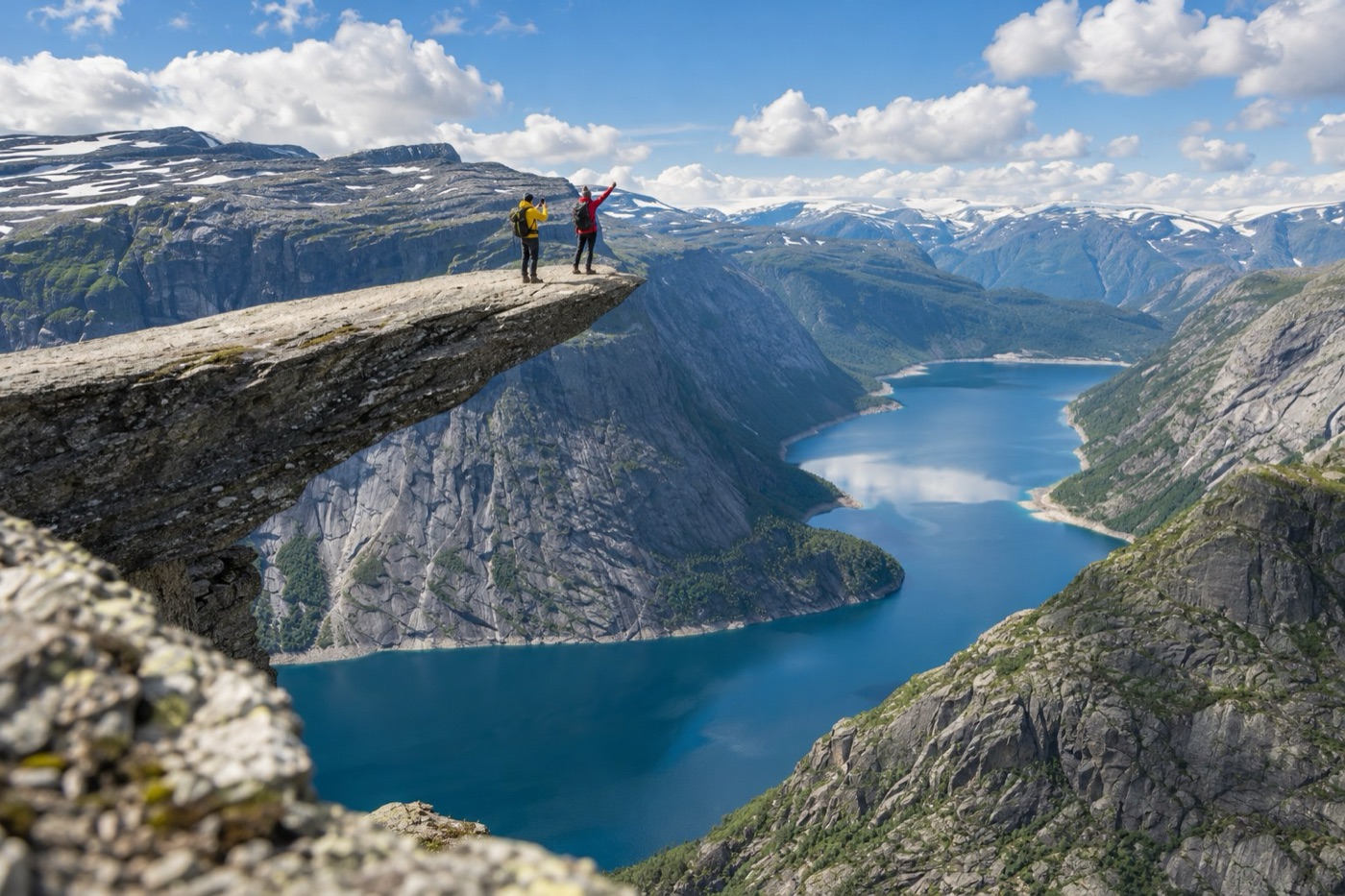
The trend has taken off under the awkward but memorable name "coolcation". Scotland, Norway and southern Sweden offer fjords, lochs, long evenings and temperatures that make walking or kayaking possible throughout the day. The attraction is not simply a colder thermometer. It is the freedom to explore without organising meals, journeys and sightseeing around the most punishing hours.
The weather has helped push this idea into the mainstream. Europe's Copernicus climate service reported that summer 2026 was the continent's third warmest on record, with western Europe recording its hottest summer. In August, the BBC visited a holiday business near Glencoe whose owners said customers were increasingly choosing Scotland because of its cooler climate. Some guests welcomed the rain rather than complaining about it. The kind of weather tourism advertisements once tried to play down had become a selling point.
There are signs that this goes beyond a few unusual travellers. Euronews reported growing interest in Scandinavian and northern European destinations. Separately, Norway's tourism organisation said roughly one in five overseas visitors regarded cooler summer temperatures as a reason for going there. However, tourism researchers are cautious about declaring the end of the beach holiday. Southern Europe is still enormously popular, and climate is only one factor alongside cost, transport links, food and personal preference. An internet search does not always turn into a booking.
Nor is heading north a perfect solution. In Norway's Lofoten Islands, growing visitor numbers have put pressure on roads, parking and local facilities. Moving crowds from one part of Europe to another could simply create new problems. Northern destinations are also experiencing climate change themselves. Scotland suffered a major wildfire in the Cairngorms during the summer, a reminder that cooler does not mean risk-free. And taking a longer flight to escape the heat can add to the emissions that contribute to global warming.
A more lasting change may be a shift in the holiday calendar. People who love Spain or Italy might still visit, but choose spring or autumn instead of the height of summer. Others may discover that their happiest holiday involves a mountain path rather than a sunlounger. The appetite for sunshine has hardly disappeared. But when a holiday starts to feel more like hard work than a break, it's understandable that a grey sky can suddenly look rather inviting.
Advanced version
The promise of the traditional European summer holiday was simple: travel south, escape the drizzle and come home with a suntan. That promise begins to fail when sightseeing becomes an endurance test and sleep requires an air conditioner running all night. After a succession of punishing summers, some travellers are choosing almost the opposite holiday. They want breathable afternoons, cool bedrooms and the once-unfashionable possibility of rain.
The label "coolcation" sounds as though it came from a marketing meeting, but the attraction is more substantial than the slogan. Northern destinations offer the possibility of walking, kayaking or exploring throughout the day rather than arranging every activity around the temperature. What was once marketed apologetically, such as cloud, wind and the chance of rain, can now be presented as freedom from a holiday governed by heat.
In Scotland, businesses are already turning their traditionally unpredictable weather into an asset. BBC reporting from Glencoe in August described holidaymakers seeking relief from heat further south and cottage owners surprised to find that customers actually welcomed a downpour. Farther east, travellers have been exploring Sweden's coast and Norway's fjords for similar reasons.
Euronews, reporting with AFP, described growing interest in northern destinations. Norway's tourism organisation said about one in five international visitors named cooler summer weather as a reason for their trip. The appeal is also being able to explore without organising every hour around the temperature.
Nevertheless, the evidence calls for a measured interpretation. A spike in online searches may reflect curiosity rather than a lasting change in behaviour, and Europe's Mediterranean destinations continue to draw enormous crowds. Decisions depend on affordability, food, culture and flight connections, not the thermometer alone. Scandinavia can also be expensive, while a rainy week in the Highlands is not everyone's idea of relaxation. Rather than abandoning southern Europe, travellers may increasingly visit it in spring or autumn, leaving the hottest months for mountain regions or northern coasts.
There is an uncomfortable irony in the enthusiasm for cooler destinations. In parts of Norway's Lofoten archipelago, rising tourist numbers have already brought about congested roads, overflowing parking areas and arguments about who should pay for local infrastructure. Tourism pressure does not become sustainable merely because it moves north; the crowds simply turn up somewhere else. Cooler regions are not insulated from the climate crisis: Scotland experienced a substantial Cairngorms wildfire that summer. Long-distance flights, meanwhile, remain part of tourism's environmental footprint, whatever the weather at the destination.
The more consequential shift may therefore concern how holidays are organised, rather than the geographical direction of travel. If tourists spread their trips across different months and destinations, some overcrowded regions could gain breathing space while less-visited communities benefit economically. But that requires planning, infrastructure and an honest account of environmental costs, not simply a new label attached to another fashionable escape. The coolcation captures a changing mood: sunshine is still wanted, but it is no longer the whole of a good holiday.
After you read
4True, false or not given5 statements
Choose T (true), F (false) or NG (the article does not say).
- Scotland experienced unusual heat and wildfires that summer.
The text says Scotland had "unusual heat and wildfires" in the same summer.
- Spain, Italy and Greece have stopped attracting summer visitors.
The text says they "remain extremely popular".
- Norway's tourism organisation said about one in five foreign visitors chose Norway partly for its cooler weather.
The text gives this figure from Norway's tourism organisation.
- Flights to Scandinavia have become cheaper as a result.
Not stated. The text says nothing about the price of flights.
- Some guests near Glencoe were unhappy when it rained.
The text says "Some guests were even pleased when it rained."
5Vocabulary5 gaps
Complete the sentences with words from the box. Two words are not needed.
attractivebenefitingcommunitiespeacefulprotectedrubbishscenery
- Small hotels in the north are from the growing number of visitors.
- Visitors left a lot of on the beach, and the town had to clean it up.
- Too many tourists can cause problems for small local .
- Sun cream keeps your skin from the sun.
- The cheap price made the offer very to us.
6Verb forms5 gaps
Write the correct form of the verb in brackets.
- Some travellers are north for cool air and light rain. (HEAD)
- Norway's Lofoten Islands many more visitors in recent years. (WELCOME)
- In August, the BBC holiday-cottage owners near Glencoe. (MEET)
- Climate change every country in Europe. (AFFECT)
- Last summer, we a week by a cold lake in Sweden. (SPEND)
7Language focuslinking words
Complete the sentences with words from the box. Two words are not needed. Some linking words give a reason, some show a result, and some show a contrast. Think about the meaning before you choose.
becausebutdespitehoweverotherwisesounless
- Some travellers choose Norway the weather is cooler there.
- It was too hot to walk, we stayed in the hotel.
- The beaches were lovely, the heat was too strong.
- Spain is still very popular. , more people now visit in spring.
- We will go to Scotland the forecast is terrible.
4True, false or not given5 statements
Choose T (true), F (false) or NG (the article does not say).
- Norwegian hotels have raised their summer prices in response.
Not stated. The text says nothing about hotel prices in Norway.
- Scotland suffered a major wildfire in the Cairngorms that summer.
The text says Scotland "suffered a major wildfire in the Cairngorms" during the summer.
- Researchers say the beach holiday has come to an end.
The text says researchers are "cautious about declaring the end of the beach holiday".
- Copernicus reported that summer 2026 was Europe's third warmest on record.
The text gives exactly this finding from Europe's Copernicus climate service.
- Copernicus said summer 2026 was the warmest on record for the whole of Europe.
It was the continent's third warmest; only western Europe had its hottest summer.
5Vocabulary6 gaps
Complete the sentences with words from the box. Two words are not needed.
awkwardemissionsfacilitiesforecastfragilemainstreampunishingreminder
- Vegan food was once unusual, but it has moved into the in many cafes.
- I felt when I met my new boss and could not remember his name.
- The marathon was : forty degrees and no shade.
- The cold, wet week was a that British weather can change quickly.
- Long flights produce that warm the planet.
- The campsite has good local , including showers and a small shop.
6Verb forms5 gaps
Write the correct form of the verb in brackets.
- By the time the guests arrived, the owners every room. (CLEAN)
- Most of the cottages last week, so we stayed in a hotel. (BOOK)
- You a waterproof jacket in the Highlands, even in July. (SHOULD / TAKE)
- Since June, the number of bookings steadily. (RISE)
- While we along the fjord, it started to rain. (WALK)
7Language focuslinking words
Complete the sentences with words from the box. Two words are not needed. Check whether the gap joins two clauses, comes before a noun phrase, or starts a new sentence. Then check that the logic works.
despiteneverthelessowingprovidedthereforeunlesswhereas
- the rising interest, researchers say it is too early to call it a lasting change.
- Some guests loved the rain, others wished for sunshine.
- Hotels in the north fill up quickly; , it is wise to book early.
- Flights to the north are often long. , many travellers accept the extra journey time.
- The cottage owners will keep their prices low demand rises sharply.
4True, false or not given5 statements
Choose T (true), F (false) or NG (the article does not say).
- Both the holidaymakers reported from Glencoe and the visitors to Norway are described as being motivated partly by cooler weather.
The Glencoe holidaymakers sought relief from heat, and one in five Norway visitors named cooler weather.
- The writer treats a rise in online searches as firm proof that holiday habits have changed.
The text says a spike in searches "may reflect curiosity rather than a lasting change".
- Most visitors to Lofoten travel there by car.
Not stated. The text mentions congested roads but gives no travel figures.
- The writer believes that spreading trips across the year would be enough on its own to solve overcrowding.
The text says this "requires planning, infrastructure and an honest account of environmental costs".
- The text suggests that cost could put some travellers off Scandinavia.
The text says "Scandinavia can also be expensive" and that decisions depend on affordability.
5Vocabulary6 gaps
Complete the sentences with words from the box. Two words are not needed.
archipelagoassetcongestedinsulatedmeasuredoverflowingspikesuccession
- The minister offered a response, avoiding both panic and complacency.
- The ring road is so at rush hour that a ten-minute journey takes an hour.
- Wealthy neighbourhoods were largely from the rise in prices.
- The old harbour, once an eyesore, is now the town's greatest .
- A of cancelled trains left commuters furious.
- A sudden in demand overwhelmed the ticket website.
6Word forms5 gaps
Use the word in brackets to make a word that fits the gap.
- The scheme was widely criticised as given the strain on local roads. (SUSTAIN)
- Her of the rules cost the company its licence. (REGARD)
- The festival's rapid growth has been to the village's fragile ecosystem. (DETRIMENT)
- Supporters hailed the of the old mill as a triumph for the town. (RESTORE)
- The mayor's remarks were met with from the packed hall. (SCEPTIC)
7Language focuslinking words
Complete the sentences with words from the box. Two words are not needed. At this level, some linkers need a noun phrase, some a clause, and some a verb form. Look at what follows the gap before you choose.
albeitconverselyhenceinasmuchnotwithstandingtherebywhereby
- The cabin was basic, spotlessly clean.
- the forecast of heavy rain, the hikers set out at dawn.
- The council trialled a scheme visitors pay a small levy for footpath repairs.
- Rents rose sharply; many young families left the village.
- Warm winters hurt ski resorts. , they can help coastal towns extend their season.
Speak
8Talk about it3 questions
Discuss in pairs or small groups. Give reasons for your answers.
- Would you change a favourite destination because its summers felt too hot?
- What makes a place a good holiday choice beyond its weather?
- Could becoming a popular cool destination create new problems for local people?
9Role-play: choosing a summer holiday
Work in pairs. Read your card, then have the conversation. Swap roles and do it again.
Student A · the friend who wants a cool holiday
You want to spend a week in Norway or Scotland this summer. You hate very hot weather and sleep badly when it is hot. Try to persuade your friend.
Student B · the friend who wants a beach holiday
You want a week in Spain. You love sunshine and swimming. Explain why, and listen to your friend's ideas. Try to agree on a plan.
Useful phrases
- I'd rather go somewhere cooler.
- I can't sleep when it's too hot.
- That's a fair point, but I love the beach.
- What if we went in May instead?
- Let's compare the prices first.
- I'm happy to compromise.
Afterwards, tell the class: where did you decide to go, and who gave way more?
Your words
Highlights0 saved
Highlights0 saved
Highlights0 saved
Was this lesson useful? Support johnplusnews on Ko-fi
Continue reading
Travel
What Happens When One of the World's Quietest Places Gets Easier to Visit?
Greenland now has three new airports and more visitors than ever, but tourism is still a small part of its economy. Some residents worry about what a rush of visitors could do to a quiet place with a fragile environment.
Society
The Couple Who Spent the Night Looking for a Stranger
A backpacker lost a wallet holding a month's money in Darwin in 1989. Two strangers visited four hostels to give it back, then disappeared.
Technology
What Is It Like to Live Next to a Data Centre?
Britain is building data centres to power artificial intelligence. In Newport and Cardiff, the people living beside them are asking who benefits.