News lessonSeptember 2026
The Discounts That May Not Bring the Visitors Back
American destinations are offering deals to win back Canadian travellers. But a family that has discovered Mexico may be in no hurry to return.
Before you read
1Warm up3 questions
Talk about these questions with a partner.
- Would a political disagreement change where you went on holiday?
- How much do you think about a country's reputation before visiting?
- Would you rather return to a favourite place or try somewhere new?
2Key words8 words
These words are in the article. Choose the letter of the meaning for each one.
- border
- escape
- destinations
- influenced
- stranger
- customers
- safety
- serious
- Abeing free from danger
- Bto get away from something you do not like
- Cchanged by what other people say or do
- Da person you do not know
- Ethe line between two countries
- Fvery bad or important
- Gpeople who buy things from a shop or business
- Hplaces that people travel to
1Warm up3 questions
Talk about these questions with a partner.
- Would a political disagreement change where you went on holiday?
- How much do you think about a country's reputation before visiting?
- Would you rather return to a favourite place or try somewhere new?
2Key words8 words
These words are in the article. Choose the letter of the meaning for each one.
- appeal
- familiarity
- promotions
- consumers
- generations
- interpretation
- commercial
- vacuum
- Apeople who buy things
- Bgroups of family members born at about the same time
- Cconnected with buying and selling
- Da way of explaining what something means
- Especial offers to make people buy something
- Fa space with nothing in it
- Gthe feeling that you know a place or thing well
- Hthe quality that makes people like something
1Warm up3 questions
Talk about these questions with a partner.
- Would a political disagreement change where you went on holiday?
- How much do you think about a country's reputation before visiting?
- Would you rather return to a favourite place or try somewhere new?
2Key words8 words
These words are in the article. Choose the letter of the meaning for each one.
- proximity
- boycott
- diplomatic
- hostility
- interdependence
- urgency
- ethical
- migration
- Arefusing to buy or use something as a protest
- Ba regular journey from one place to another
- Cangry and unfriendly feeling
- Dbeing close to something in distance
- Ea situation where each side needs the other
- Fconnected with the work of governments dealing with other countries
- Gthe feeling that something must be done quickly
- Hconnected with what is right and wrong
Read
3Read the article
The paragraphs are numbered. Look out for the key words from task 2.
Core version
For many Canadians, taking a holiday in the United States has always been simple. They can drive across the border to shop, visit friends or spend a few days in another city. Some older Canadians also travel south in winter to escape the cold. For years, nobody thought twice about it.
But during 2025 and 2026, fewer Canadians made these journeys. The reasons varied. Relations between the two countries had become more difficult because of political arguments and trade disputes, and some travellers said they no longer felt welcome. Others did not want to spend their money in the United States while the arguments continued, so they cut back on trips south.
This created problems for American businesses. Hotels, restaurants and shops in areas that usually rely on Canadian visitors began to feel the effects. In September 2026, reports described tourist organisations offering discounts and special deals to bring Canadian customers back. A quiet season is a serious worry for a small business that depends on a few busy months.
Not every Canadian made the same decision. Some people carried on travelling south for work, family or holidays. Others picked destinations such as Mexico, or stayed in Canada and explored their own country instead. Money matters too. The exchange rate, prices and worries about personal safety can all put travellers off before politics is even mentioned.
The disagreement raises a question about whether tourists should be influenced by politicians. A hotel worker in an American city has nothing to do with a government decision, but that worker can still lose income when international visitors stay away. The people who pay first are often the ones with the least power.
Travel is usually described as a way of bringing people from different cultures together. A friendly conversation with a stranger can change the way you see a whole country. Yet a holiday can also become a way of showing disagreement, because customers choose where their money goes.
So is a cancelled holiday a useful protest, or does it mainly hurt ordinary people who depend on tourism? Canadians are making up their minds one trip at a time, and in the long run their choices may say as much about the two countries as any official statement.
Intermediate version
Canadians have traditionally been among the United States' most important international visitors. A short drive across the border can lead to a shopping trip, a weekend away or an extended winter holiday. Yet political tensions and trade disputes have encouraged some travellers to reconsider a journey that once felt entirely routine.
For decades, the appeal was never only the destination. Closeness, a shared language and a sense of familiarity made an American trip the obvious default, which is exactly why a change of mood has been so visible. Once a journey stops feeling automatic, travellers start comparing it with alternatives they had never bothered to consider.
Reporting in September 2026 described American tourism organisations trying to persuade Canadians to come back. Discounts and special promotions were rolled out in destinations that depend on cross-border spending. The campaigns followed a noticeable decline in Canadian visits and growing concern about the money hotels, shops and restaurants were losing.
The reasons for staying away are not identical for everyone. Some travellers object to political rhetoric or trade policies. Others are uneasy about how they might be treated, while practical factors such as prices and exchange rates also weigh on their decisions. A number have chosen to holiday within Canada or head somewhere else entirely, which suggests the money has not disappeared so much as moved.
There are competing ways of interpreting this behaviour. Avoiding a destination can be a peaceful form of political expression, since consumers get to decide where their money goes. Critics call it a blunt instrument. The people who suffer first tend to be hotel employees, restaurant owners and small businesses rather than the politicians responsible for the tension.
The situation is especially complicated along a border where personal and economic connections have built up over generations. Families, workers and businesses on both sides depend on regular travel, and some communities are used to welcoming the same visitors year after year. A disagreement between governments can therefore spill over into relationships that have very little to do with national politics.
It is also worth asking how long the effect will last. Travel habits are not easily broken, and a traveller who has discovered a new destination may be in no hurry to go back. That is only an interpretation, and nobody can yet say whether habits have changed for good. Tourism organisations may find that winning customers back takes longer than losing them did.
The industry often promises an escape from everyday problems, but holidays never take place in a political vacuum. Canada's changing travel patterns show how quickly ideas about hospitality, national identity and trust can affect a commercial relationship that previously looked secure.
Advanced version
Political friction has changed some Canadians' travel plans. A familiar destination can feel different once a visitor begins to wonder whether they are welcome. Cross-border tourism between Canada and the United States has historically rested on more than attractive destinations: geographic proximity, family connections and a deep sense of familiarity made an American holiday the default choice for millions of Canadians.
In September 2026, reporting described US tourism organisations launching promotions aimed at coaxing Canadian visitors back after a substantial decline in travel. Destinations long accustomed to Canadian spending found hotels, restaurants and retailers under pressure. The impact was most conspicuous in businesses for which a large northern customer base had been taken for granted rather than actively courted.
Few journeys are as deeply embedded in routine as the winter migration of older Canadians heading south, or the weekend shopping run that barely registers as travel at all. Precisely because such trips were habitual rather than deliberate, they proved unusually vulnerable. A decision that was never really made in the first place can be abandoned without much soul-searching.
The motives behind the shift were varied. Some Canadians objected to political statements and trade measures; others cited discomfort, uncertainty or straightforward financial calculation. It would be inaccurate to put every cancelled trip down to a single political cause, given that exchange rates, costs and personal circumstances have always shaped international travel. What changed was less the arithmetic than the atmosphere surrounding it.
Nevertheless, the trend has the character of a consumer boycott, even in the absence of any organised campaign. Travellers can register dissatisfaction through their spending without attending a single demonstration, and such a protest is notably easy to sustain, since it consists of doing nothing. The difficulty is that the immediate consequences fall on workers and small firms with negligible influence over national policy.
Border communities illustrate the point with uncomfortable clarity. Families, employers and small traders on either side have spent generations building ties that national politics barely acknowledges, and it is these relationships, not those between governments, that absorb the first shock of a dispute. Seen from a quiet hotel reception or a half-empty restaurant, a trade argument conducted in capital cities looks less like policy than weather.
The episode also challenges a comfortable assumption: that tourism naturally improves relations between neighbouring countries. Personal contact may well build trust, yet diplomatic hostility can prevent that contact from happening at all. Economic interdependence, far from guaranteeing stability, simply raises the cost of a quarrel once public sentiment is drawn into it.
Nor is the damage easily reversed. Habits broken over two seasons are not necessarily picked up again when the headlines move on, and travellers who have found alternatives elsewhere may feel no particular urgency about returning. Promotional discounts can address price, but they work less well against the sense of having been made to feel like an unwanted guest.
The Canadian response raises a broader ethical question. Individuals are entitled to choose destinations that reflect their values, yet those choices inevitably affect people who may share their objections to their own government. That there is no straightforward answer is precisely what makes consumer choice such a complicated form of political expression.
After you read
4True, false or not given5 statements
Choose T (true), F (false) or NG (the article does not say).
- Every Canadian stopped travelling to the United States.
The text says the opposite: "Not every Canadian made the same decision."
- Some Canadians travel south in winter to escape the cold.
The text says: "Some older Canadians also travel south in winter to escape the cold."
- Canadian visits have begun to rise again.
Not stated. The text does not say whether Canadian visits have begun to rise again.
- Reports in September 2026 described discounts aimed at Canadians.
The text says: "In September 2026, reports described tourist organisations offering discounts and special deals to bring Canadian customers back."
- A hotel worker in an American city makes government decisions.
The text says: "A hotel worker in an American city has nothing to do with a government decision"
5Vocabulary5 gaps
Complete the sentences with words from the box. Two words are not needed.
currencydiscountsdisputesexploredincomejourneysprotest
- A hotel can lose when fewer visitors arrive.
- Trade between countries can make life harder for ordinary people.
- Shops often offer in the quiet season to attract customers.
- Last summer, some families their own country instead of going abroad.
- Some people see a cancelled holiday as a quiet against a government.
6Verb forms5 gaps
Write the correct form of the verb in brackets.
- Last year, many Canadians to Mexico instead. (FLY)
- Tourist offices special deals last September. (OFFER)
- She the border and bought a new coat. (CROSS)
- Some people their money in Canada instead. (SPEND)
- Travel people from different cultures together. (BRING)
7Language focuslinking words
Complete the sentences with words from the box. Two words are not needed. Linking words join ideas. Use because for a reason, so for a result, but for a difference, while for two things at once and or for a choice.
becausebutorsounlessuntilwhile
- Many Canadians cut back on trips they did not want to spend money in the United States.
- The rooms stayed empty all winter, the owner had to close the hotel for a month.
- some families drove south, others flew to Mexico.
- You can drive across the border fly to a warmer place.
- I wanted to visit the lake, the tickets were too expensive.
4True, false or not given5 statements
Choose T (true), F (false) or NG (the article does not say).
- Everyone stayed away for the same political reason.
The text says the opposite: "The reasons for staying away are not identical for everyone."
- Canadian airlines have cut flights to the United States.
Not stated. The text does not say whether Canadian airlines have cut flights.
- The writer says winning customers back may take longer than losing them.
The text says: "Tourism organisations may find that winning customers back takes longer than losing them did."
- Some Canadians chose to holiday within Canada or in another country instead.
The text says: "A number have chosen to holiday within Canada or head somewhere else entirely, which suggests the money has not disappeared so much as moved."
- The writer is certain that travel habits have changed for good.
The text says: "That is only an interpretation, and nobody can yet say whether habits have changed for good."
5Vocabulary6 gaps
Complete the sentences with words from the box. Two words are not needed.
alternativescampaigndeclinehospitalitypersuadereconsiderreputationrhetoric
- The tourist board hopes a free night will families to book again.
- Sales fell sharply, and the in visitor numbers worried local shops.
- After the news report, several couples decided to their winter plans.
- Cheap flights give travellers real to a long drive.
- Guests praised the warm they received at the small family hotel.
- Politicians often use angry before an election.
6Verb forms5 gaps
Write the correct form of the verb in brackets.
- By the time the discounts appeared, many families their plans. (CHANGE)
- Hotels along the border on Canadian visitors for many years, and they still do. (DEPEND)
- Last September, special discounts to Canadian travellers. (OFFER)
- Several families after the first discount offer. (NOT / RETURN)
- The tourist board that more families will visit next year. (HOPE)
7Language focuslinking words
Complete the sentences with words from the box. Two words are not needed. Sentence adverbs such as nevertheless, therefore and moreover start after a full stop or a semicolon and are followed by a comma.
despitemoreoverneverthelessotherwisesincethereforeunless
- Many Canadians love the American coast. , they have started looking elsewhere.
- The shops depend on Canadian spending; , a fall in visits hits them hard.
- Many Canadians cancelled trips the exchange rate had made everything more expensive.
- The drive is short and the hotels are familiar. , the shopping is cheap.
- Tourism offices must win back trust; , the discounts will not bring visitors back.
4True, false or not given5 statements
Choose T (true), F (false) or NG (the article does not say).
- The writer suggests that habit made Canadian holidays in the United States easy to abandon.
The text says such trips "were habitual rather than deliberate" and so "proved unusually vulnerable".
- The writer claims that one political cause explains every cancelled trip.
The text says it "would be inaccurate to put every cancelled trip down to a single political cause".
- Most Canadians who changed their plans chose Mexico.
The text mentions alternatives elsewhere but never names Mexico or says where most people went.
- Discounts may deal with price but not with the feeling of being unwelcome.
The text says promotional discounts "can address price" but "work less well against" feeling like an unwanted guest.
- The text says close economic ties make a quarrel between neighbours less costly.
The text says interdependence "simply raises the cost of a quarrel".
5Vocabulary6 gaps
Complete the sentences with words from the box. Two words are not needed.
backlashcoaxingconspicuousembeddedexposurefrictionsentimentvulnerable
- The council spent weeks wary tourists back with cut-price offers.
- Empty tables made the drop in guests all the more .
- Hospitality jobs in small towns are to any sudden drop in tourism.
- Habits of travel are so deeply in family routine that changing them takes a real shock.
- Years of between the two governments have soured the mood.
- Public turned sharply against travelling to the United States.
6Word forms5 gaps
Use the word in brackets to make a word that fits the gap.
- Hoteliers were surprised by the of the dispute. (ESCALATE)
- Hoteliers found the sudden drop in bookings largely . (EXPLAIN)
- A fair of the damage must consider rising costs as well. (ASSESS)
- Some visitors saw the offers as a rather attempt to buy back goodwill. (CYNIC)
- Rebuilding trust is likely to prove for the industry. (PROBLEM)
7Language focuslinking words
Complete the sentences with words from the box. Two words are not needed. Albeit, thereby, hence and whereby are formal. Albeit softens a point, thereby shows a result of an action, hence gives a reason and takes a noun, and whereby explains how something works.
albeithencenonethelessnotwithstandingtherebywhereaswhereby
- The discounts were generous, too late for many businesses.
- the genuine warmth of local residents, many Canadians felt unwelcome.
- Visitors have stayed away, depriving small firms of their busiest weeks.
- Canadians resent being taken for granted; the sharp fall in bookings.
- A boycott is a protest consumers express opinions simply by staying at home.
Speak
8Talk about it3 questions
Discuss in pairs or small groups. Give reasons for your answers.
- Can choosing where to travel be an effective way to make a point?
- Who feels the effect when visitors stay away?
- What would persuade you to return to a destination you had stopped visiting?
8Talk about it3 questions
Discuss in pairs or small groups. Give reasons for your answers.
- Can choosing where to travel be an effective way to make a point?
- Who feels the effect when visitors stay away?
- What would persuade you to return to a destination you had stopped visiting?
8Talk about it3 questions
Discuss in pairs or small groups. Give reasons for your answers.
- Can choosing where to travel be an effective way to make a point?
- Who feels the effect when visitors stay away?
- What would persuade you to return to a destination you had stopped visiting?
9Role-play: winning back a regular guest
Work in pairs. Read your card, then have the conversation. Swap roles and do it again.
Student A · the hotel manager
You run a hotel in an American border town. Your Canadian guests have stopped coming. Phone a regular guest. Offer a deal and ask what would bring them back.
Student B · the Canadian guest
You stayed at this hotel every winter. This year you went to Mexico. Explain why, listen to the offer, then decide if you will go back.
Useful phrases
- We've missed you at the hotel.
- I'd like to offer you a special price.
- It's not only about the price, to be honest.
- We're thinking about trying somewhere new.
- What would make you change your mind?
- I'll think about it and let you know.
Afterwards, tell the class: did the guest agree to return, and what finally decided it?
Your words
Highlights0 saved
Highlights0 saved
Highlights0 saved
Was this lesson useful? Support johnplusnews on Ko-fi
Continue reading
Travel
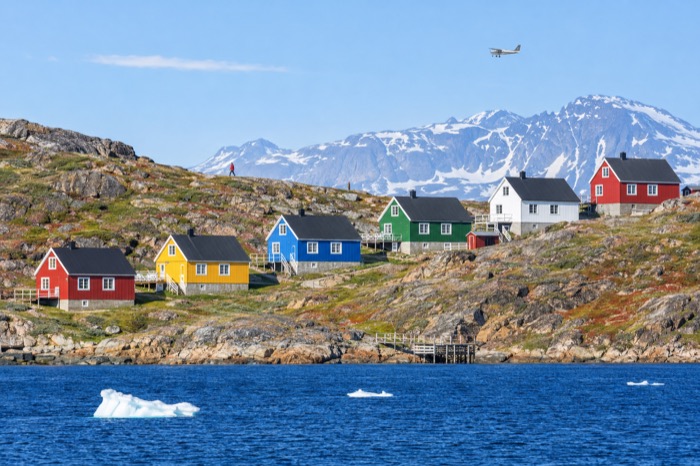
What Happens When One of the World's Quietest Places Gets Easier to Visit?
Greenland now has three new airports and more visitors than ever, but tourism is still a small part of its economy. Some residents worry about what a rush of visitors could do to a quiet place with a fragile environment.
Society
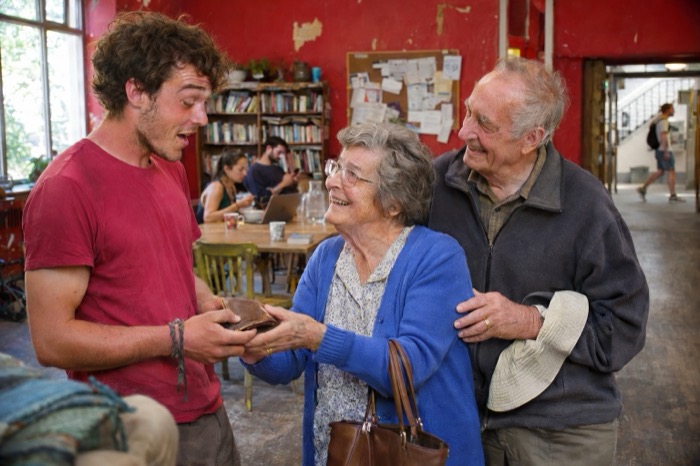
The Couple Who Spent the Night Looking for a Stranger
A backpacker lost a wallet holding a month's money in Darwin in 1989. Two strangers visited four hostels to give it back, then disappeared.
Travel
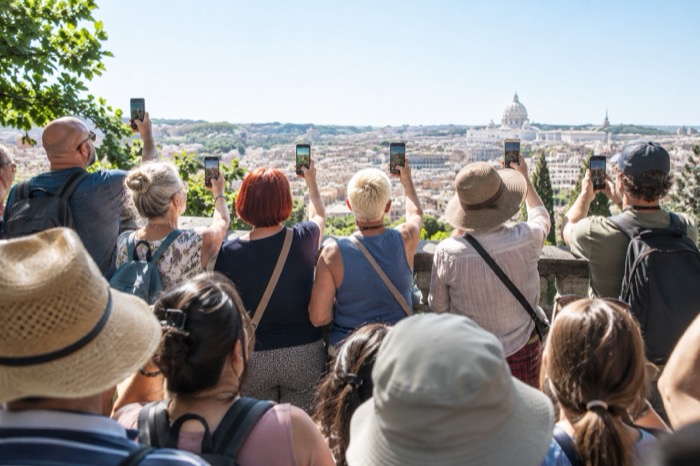
Is Instagram Choosing Our Holidays?
A beautiful image can send you across the world. It can also send several thousand other people to the same railing.