News lesson12 October 2026
Hidden Under the Stairs: How Two Renoirs Came Home
The burglars fled when the alarm sounded, dropping half their haul and a cover carrying DNA. That mistake led police to six arrests.
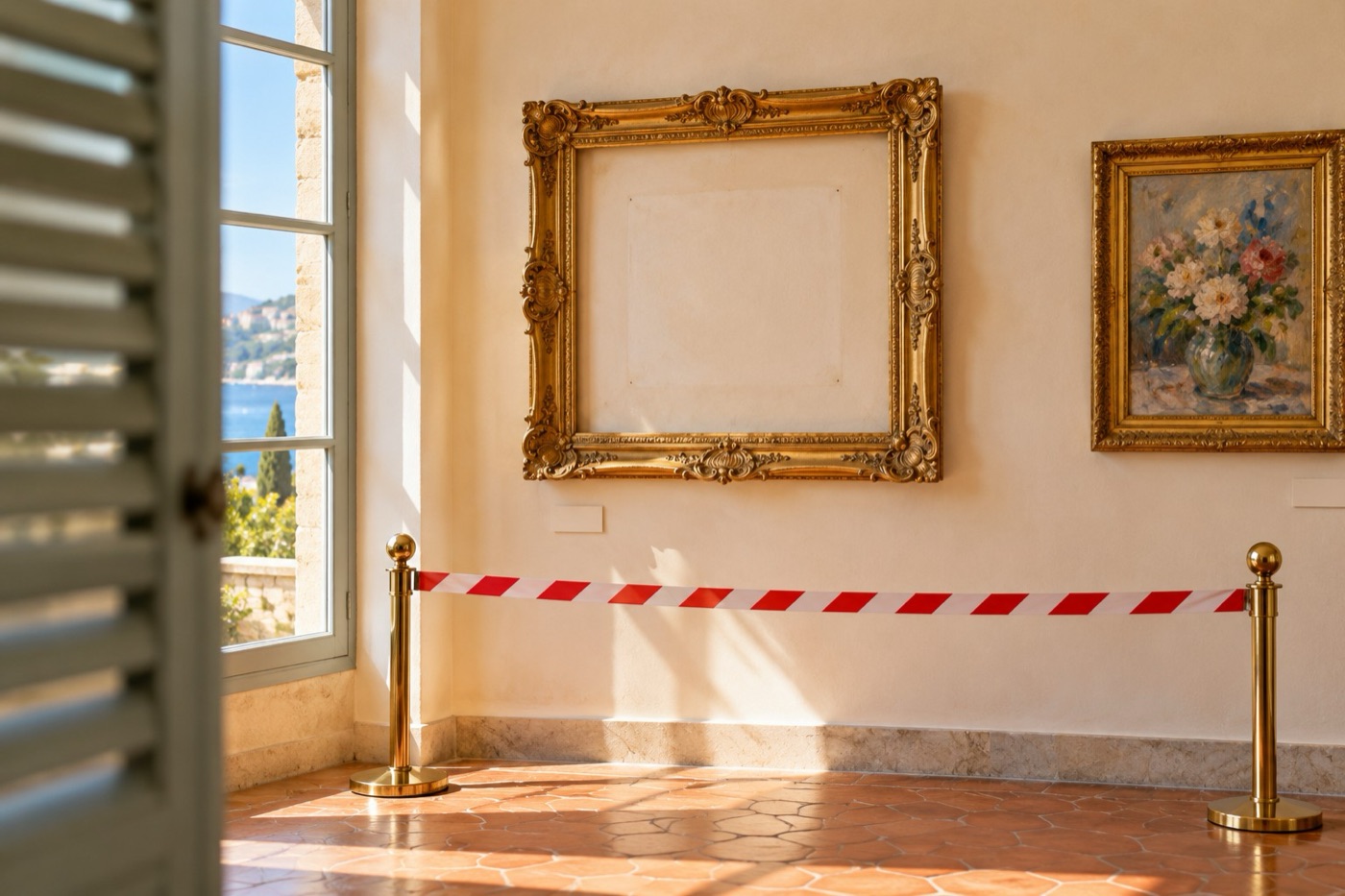
Before you read
1Warm up3 questions
Talk about these questions with a partner.
- Why do some paintings become worth millions?
- Would you rather own a famous picture or one you simply love?
- What makes a real-life theft different from a film heist?
2Key words8 words
These words are in the article. Choose the letter of the meaning for each one.
- prosecutor
- evidence
- canvas
- charges
- security
- ambitious
- specialists
- condition
- Afacts or things that help show what happened
- Bofficial statements that someone did a crime
- Cthings that keep a place safe
- Dvery big and hard to do, needing a lot of effort
- Ethe cloth that an artist paints on
- Fa lawyer who says in court that someone did a crime
- Gpeople who know a lot about one subject
- Hhow good or bad something is
1Warm up3 questions
Talk about these questions with a partner.
- Why do some paintings become worth millions?
- Would you rather own a famous picture or one you simply love?
- What makes a real-life theft different from a film heist?
2Key words8 words
These words are in the article. Choose the letter of the meaning for each one.
- breakthrough
- intruders
- haul
- immense
- convictions
- relief
- occupies
- resources
- Apeople who go into a place without permission
- Bfills or uses a place or building
- Can important discovery that helps solve a problem
- Dthe happy feeling when a worry has gone
- Emoney and other things a person or group can use
- Fextremely large
- Gofficial decisions in court that someone is guilty
- Ha large amount of things that someone has taken
1Warm up3 questions
Talk about these questions with a partner.
- Why do some paintings become worth millions?
- Would you rather own a famous picture or one you simply love?
- What makes a real-life theft different from a film heist?
2Key words8 words
These words are in the article. Choose the letter of the meaning for each one.
- forensic
- elaborate
- deposited
- paradox
- discreetly
- municipal
- restoration
- association
- Ausing science to study evidence from a crime
- Bleft in a place so that it is kept there
- Cthe careful repair of something old to its first condition
- Dvery detailed and carefully planned
- Ea connection between two things in people's minds
- Fa situation with two parts that seem to contradict each other
- Gbelonging to a town or city
- Hin a careful way that avoids attention
Read
3Read the article
The paragraphs are numbered. Look out for the key words from task 2.
Core version
At 5.48am on 8 September 2026, an alarm went off at a small museum on the French Riviera. Two people had broken into the former home of the famous painter Pierre-Auguste Renoir. They were trying to steal four paintings. Within minutes, police were on their way, and the thieves were running out of time. They escaped with only two of the four. The other two were left behind. The paintings they took were later valued by a prosecutor at around €4.2 million.
The museum is in Cagnes-sur-Mer, near Nice, where Renoir spent the final years of his life. According to French officials, the thieves cut through a fence and entered through a window. The alarm interrupted the robbery. They abandoned two paintings as they hurried away, but managed to take Portrait of Madame Colonna Romano and Young Woman at the Well. Both had been lent to the museum by the Musée d'Orsay in Paris.
For several weeks, the missing paintings were nowhere to be found. Police examined evidence from the museum and investigated the people they believed might be involved. A cover left behind during the escape contained DNA that helped identify a suspect. Investigators also used information from a vehicle that was being tracked as part of another police investigation. These clues helped them follow the trail.
The story took another turn when police became worried that a second robbery might be planned. One suspect had visited another art museum, and investigators feared the group could strike again. They decided to make arrests. Six people were arrested, and four men faced preliminary charges. Being charged, however, does not mean someone has been found guilty.
Police eventually recovered the two missing Renoirs from a hiding place behind a wall beneath a staircase in a house. The paintings were not in perfect condition. One canvas had been torn and another frame was damaged. Specialists were asked to examine them before their return to the museum.
The case raised questions about protecting valuable art. Small museums often have fewer security resources than famous galleries, yet they may hold paintings worth millions. There is also the problem of selling stolen masterpieces: buyers know that such works are recognised around the world. The thieves had apparently planned an ambitious crime, but their escape left behind the very clues that helped police find the art.
Intermediate version
Shortly before six in the morning, an alarm sounded at a quiet museum on the French Riviera. By the time the local police arrived, two intruders had disappeared, leaving behind a confused scene and two paintings they had apparently intended to steal. Two other works by Pierre-Auguste Renoir were missing. It was 8 September 2026, and a museum devoted to one of France's best-known painters had become the centre of an international art-theft investigation. The haul the thieves got away with was later valued by the Marseille prosecutor at approximately €4.2 million.
The setting made the robbery particularly striking. The Renoir Museum in Cagnes-sur-Mer occupies the artist's former home, a place that attracts visitors interested in his life as much as his paintings. French officials said the intruders cut through a garden fence and entered through a window. They targeted four works, but the alarm forced them to abandon two during their escape.
The paintings that vanished were Portrait of Madame Colonna Romano and Young Woman at the Well, both on loan from the Musée d'Orsay in Paris. For weeks, investigators had no public answer to the obvious question: where had they gone?
The breakthrough was less glamorous than the theft itself. Police found DNA on a protective cover left behind at the scene. It matched a man already known to investigators, whose vehicle was being monitored in another inquiry. Tracking information, communications evidence and further surveillance helped officers piece together movements after the burglary. Rather than guessing which collector might secretly want a Renoir, investigators tracked down the suspects through the ordinary mistakes they had made.
Then the case became more urgent. Police observed that one suspect had visited the Maeght Foundation, another institution with important works of art. Prosecutors believed a second theft might be imminent. Officers closed in on the suspects and arrested them before it could happen. Six people were arrested in total, and four men received preliminary charges connected with the theft or handling stolen goods. Those charges were allegations to be tested through the legal process, not convictions.
The missing paintings were recovered from behind a concealed wall beneath a staircase in a house. Their survival came as a relief, though one had suffered a tear and the other damage to its frame. The French Ministry of Culture announced that specialists would examine the works in Marseille before they returned to Cagnes-sur-Mer. The paintings had escaped permanent disappearance, but not the consequences of being handled as criminal property.
The investigation reopened an uncomfortable debate about museum security. A small cultural institution can hold works of immense financial and historical value without having the resources of a national gallery. Meanwhile, the criminals face a practical difficulty of their own: famous paintings are extraordinarily difficult to sell openly. In this case, a carefully planned break-in ended with abandoned evidence, suspected preparations for another robbery and two priceless objects hidden in a wall. It was hardly the elegant operation imagined in an art-heist film.
Advanced version
At 5.48am on 8 September 2026, the alarm at the Renoir Museum in Cagnes-sur-Mer began sounding. Five minutes later, municipal police were at the scene. The intruders had already made off, apparently abandoning half their intended haul in the rush to escape. Two paintings by Pierre-Auguste Renoir remained missing. Investigators had to work through the forensic clues the thieves had left behind. By October, prosecutors placed the combined value of the missing works at approximately €4.2 million, although earlier estimates in the press had been considerably higher.
The museum occupies the painter's former home on the French Riviera, a setting better known for its association with Impressionist art than organised crime. According to the French Ministry of Culture, the burglars breached a fence and entered through a window before removing four works. The alarm cut the operation short, and two paintings were discarded nearby. The thieves nevertheless escaped with Portrait of Madame Colonna Romano and Young Woman at the Well, works that had been deposited at the museum by Paris's Musée d'Orsay. Their cultural significance made the disappearance especially troubling, regardless of which financial valuation was used.
Investigators eventually came across an important trace on a protective cover abandoned during the getaway. DNA helped identify a suspect who was already under investigation in a separate case, meaning police had access to information about his vehicle's movements. Combined with surveillance and communications evidence, those details allowed officers to reconstruct links between individuals and locations. The investigation illustrated a persistent weakness of elaborate criminal schemes: the more people and journeys involved, the more opportunities there are to leave an identifiable trail.
Police did not wait for every question to be resolved. After surveillance suggested that one suspect had visited the Maeght Foundation, another prominent art institution, the Marseille prosecutor said investigators feared a further robbery was imminent. Arrests followed. Six people were detained and four men were given preliminary charges relating to organised theft, receiving stolen property or alleged criminal association. The legal distinction matters: prosecutors had set out their case, but the suspects had not been convicted.
The two missing paintings were eventually discovered concealed behind a wall beneath a staircase in a house. The paintings were recovered, but not unscathed: officials reported a torn canvas and damage to a frame. The works were transferred for specialist examination and potential restoration before their planned return to the museum. The physical harm also illustrated why art theft is not simply a dispute over ownership. A painting can survive for more than a century only to be damaged during a few hurried minutes of illegal handling.
Beyond the improbable hiding place, the case exposed a vulnerability shared by many regional museums. They preserve works of enormous cultural importance while operating without the formidable security budgets of major national institutions. Yet the burglars confronted a paradox too. The more recognisable a stolen masterpiece becomes, the harder it is to dispose of it discreetly. This robbery may have been ambitious, but its aftermath was defined by ordinary evidence, the fear of another crime and two famous paintings concealed in a space barely large enough to hold them.
After you read
4True, false or not given5 statements
Choose T (true), F (false) or NG (the article does not say).
- The alarm sounded at 5.48am on 8 September 2026.
The text says: "At 5.48am on 8 September 2026, an alarm went off at a small museum on the French Riviera."
- The thieves escaped with all four paintings.
The text says the opposite: "They escaped with only two of the four."
- The museum has since installed new security cameras.
Not stated. The text does not say whether the museum has changed its security.
- DNA found on an item left at the scene helped police identify a suspect.
The text says: "A cover left behind during the escape contained DNA that helped identify a suspect."
- Both paintings that the thieves took belonged to the museum.
The text says both had been "lent to the museum by the Musée d'Orsay in Paris".
5Vocabulary5 gaps
Complete the sentences with words from the box. Two words are not needed.
abandonedarrestedinterruptedinvestigatedrecoveredstolenvalued
- A loud alarm the robbery, so the thieves had to run.
- The thieves two paintings because the police were coming.
- Police the two missing paintings from a house.
- Police the museum and the area around it for clues.
- Six people were and taken to a police station.
6Verb forms5 gaps
Write the correct form of the verb in brackets.
- Two people had into the former home of the painter. (BREAK)
- They with two artworks but left the other two behind. (ESCAPE)
- They were trying four paintings. (STEAL)
- Buyers know that such works around the world. (RECOGNISE)
- Specialists to examine them before their return. (ASK)
7Language focusprepositions
Complete the sentences with words from the box. Two words are not needed. Little words like at, for and about often come after a certain verb or adjective. Learn them together.
aboutatforinofthroughto
- The thieves cut a fence to reach the garden.
- The two paintings were valued around €4.2 million.
- The small museum is famous its link with Renoir.
- Police were worried a second robbery.
- Many visitors are interested the life of Renoir.
4True, false or not given5 statements
Choose T (true), F (false) or NG (the article does not say).
- One suspect was traced partly because his vehicle was already being watched in another inquiry.
The DNA matched a man "whose vehicle was being monitored in another inquiry".
- The Maeght Foundation was robbed before the arrests were made.
Police arrested the suspects "before it could happen".
- The stolen paintings were insured for their full value.
Not stated. The text does not say whether the paintings were insured.
- The paintings on display belonged to a private collector.
They were "on loan from the Musée d'Orsay in Paris", a museum.
- The writer thinks the break-in was less skilful than an art-heist film would suggest.
The text calls it "hardly the elegant operation imagined in an art-heist film".
5Vocabulary6 gaps
Complete the sentences with words from the box. Two words are not needed.
abandonallegationsconcealedimminentmonitoredoccupiedsufferedvanished
- The alarm forced the burglars to part of what they had stolen.
- Detectives were sure a second theft was , so they acted quickly.
- Officers every journey the van made and kept detailed records.
- A thief who hides stolen goods in a secret place has them from view.
- The charges are only , and the court has not decided anything yet.
- She a serious injury in the accident but recovered fully.
6Verb forms5 gaps
Write the correct form of the verb in brackets.
- Police DNA on a protective cover left at the scene. (FIND)
- The ministry announced that specialists the works in Marseille. (EXAMINE)
- If the alarm hadn't sounded, the thieves all four paintings. (TAKE)
- Before the police found them, the paintings behind a wall for several weeks. (HIDE)
- Six people in total. (ARREST)
7Language focusprepositions
Complete the sentences with words from the box. Two words are not needed. Many adjectives and verbs need one fixed preposition. Learn the whole phrase, not just the adjective.
atbyforfromofonwith
- The Renoirs on display were on loan a larger museum in Paris.
- Prosecutors were suspicious the suspect's visit to another gallery.
- The thieves were responsible the damage to the fence.
- Detectives relied DNA evidence to find the suspect.
- Experts compared the DNA found at the scene police records.
4True, false or not given5 statements
Choose T (true), F (false) or NG (the article does not say).
- The prosecutors' valuation of the paintings was lower than some earlier press estimates.
The text says earlier press estimates "had been considerably higher" than €4.2 million.
- The thieves took away more paintings than they left behind.
They targeted four works, abandoned two and escaped with two, so the numbers were equal.
- Police could link a suspect to the theft partly because of a separate investigation.
The suspect was "already under investigation in a separate case", so police knew his vehicle's movements.
- A trial date has been set for the four men charged.
Not stated. The text does not mention a trial or any court date.
- Police arrested the group only after a second theft had been attempted.
Police feared a robbery was imminent and arrests followed, so the second theft had not happened.
5Vocabulary6 gaps
Complete the sentences with words from the box. Two words are not needed.
breachedconcealeddetaineddiscardedimminentpersistentreconstructvulnerability
- The consultant warned that the software contained a serious that hackers could exploit.
- Several protesters were overnight and released without charge the next morning.
- Having judged the proposal unworkable, the committee it in favour of a simpler one.
- Detectives had to the sequence of events from a handful of CCTV frames.
- The spy's microphone was so cleverly inside the lamp that nobody noticed it for years.
- Despite repeated refusals, her lobbying eventually changed the law.
6Word forms5 gaps
Use the word in brackets to make a word that fits the gap.
- The merger was met with widespread among long-serving staff. (SCEPTIC)
- Her to accept criticism damaged her working relationships. (WILLING)
- The theft cast doubt on the of the museum's alarm system. (RELY)
- Experts expressed over whether the canvas could be fully repaired. (CERTAIN)
- She had deleted the file, and only later realised what she had done. (INTENTION)
7Language focusprepositions
Complete the sentences with words from the box. Two words are not needed. At this level, fixed phrases such as tantamount to and fraught with are worth learning as single units.
atfromofonovertowith
- A raid on a gallery this size was fraught risk.
- Selling a famous stolen painting openly is tantamount announcing the crime.
- The loan of the works was contingent adequate security.
- Many thefts of this kind stem a belief that small museums are easy targets.
- The plan was bereft any realistic way of selling the paintings.
Speak
8Talk about it3 questions
Discuss in pairs or small groups. Give reasons for your answers.
- What does a museum owe visitors as well as the objects it protects?
- Would a stolen painting be worth anything if you could never show it?
- Should museums display a convincing copy when an original is missing?
9Role-play: more money for museum security
Work in pairs. Read your card, then have the conversation. Swap roles and do it again.
Student A · the museum manager
A small museum has just lost two paintings. You want money for a better alarm and a night guard. Explain why it matters and say what will happen if you get nothing.
Student B · the town councillor
The town has a small budget and many other needs. Ask how much the museum wants and why. You can say yes, no, or give some of the money.
Useful phrases
- We'd like to ask for some extra money.
- It's not just about the paintings, it's about the visitors.
- How much would it cost?
- I'm afraid we can't afford all of it.
- Could we start with the alarm?
- That's a fair point, I'll think about it.
Afterwards, tell the class: how much money did the museum get, and was it fair?
Your words
Highlights0 saved
Highlights0 saved
Highlights0 saved
Was this lesson useful? Support johnplusnews on Ko-fi
Continue reading
Food
The Chef Who Lost His Job Over Pineapple
An Italian chef in Australia was sacked for refusing to add pineapple. A food historian says the rule he was defending is younger than he thinks.
History
Were People Getting High 2,800 Years Ago?
Cannabis seeds and chemical traces in preserved hair from a Siberian tomb suggest that some Scythians were exposed to its intoxicating compounds about 2,800 years ago. The evidence is strong, but it leaves many questions open.
Culture
Why Young People Are Turning Up to Ceilidhs
An old Scottish and Irish dance is filling pubs with people in their twenties. Ticket sales are up, and nobody has to arrive with friends.